Alzheimer’s Center
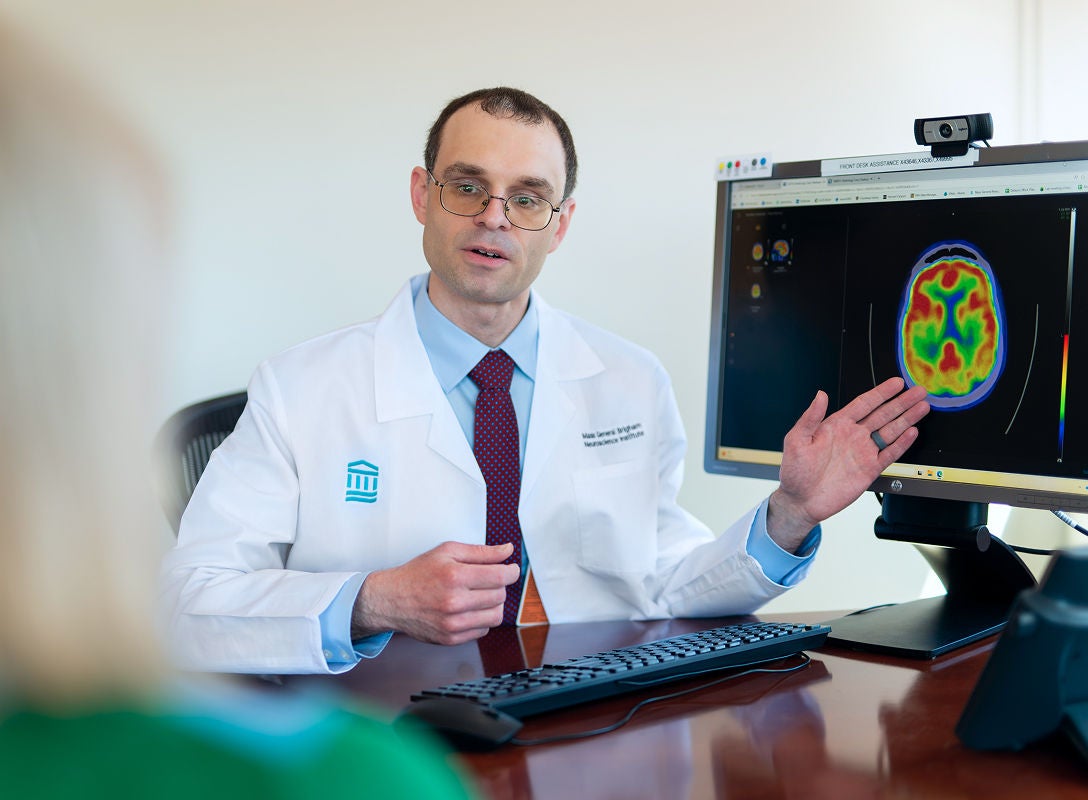
Multidisciplinary care for Alzheimer’s disease
Alzheimer’s disease causes progressive changes in memory, thinking, and behavior that can interfere with daily life and deeply affect patients and their families.
Our team at Mass General Brigham Neuroscience Institute provides compassionate, personalized care for people with Alzheimer’s disease.
In addition to comprehensive evaluation and ongoing support, we offer access to the latest disease-modifying therapies for eligible patients, including lecanemab and donanemab.
Part of the Neuroscience Institute
Our approach to care
We offer disease-modifying therapies for eligible patients with early-stage Alzheimer’s disease. These therapies have been shown to slow memory decline in some patients.
- Eligibility: Based on cognitive testing, neurological exams, medical history, and brain MRI.
- Informed decision making: Your care team reviews how these medications work, the benefits and risks, and safety monitoring.
- Infusion and follow-up care: Medications are given at designated infusion centers. Lecanemab is administered every two weeks and donanemab every four weeks, with clinic visits typically every six months.
- MRI safety monitoring: Brain MRIs are required during the first six months of treatment, along with periodic check-ins from your care team.
Although there is no single definitive test for Alzheimer’s disease, our specialists use a comprehensive evaluation to diagnose the condition and rule out other causes of memory loss. Diagnostic testing may include:
- Neurological exam
- Cognitive and mental status testing
- Neuropsychological and neuropsychiatric assessment
- Brain imaging
- Blood tests
- Spinal fluid tests
Treatment plans are based on your symptoms, disease stage, overall health, and the goals of you and your family. Care may include:
- Medications to support cognitive function and manage symptoms
- Education, counseling, and future planning support
- Treatment of other medical conditions that may affect brain health
- Psychiatry and mental health services, when needed
Mass General Brigham Neuroscience Institute
Neuroscience clinical trials and research

Explore our neuroscience research
Learn how neuroscience research informs patient care
Search clinical trials
Search open clinical trials for neurological conditions
Contact the Alzheimer's Center
Brigham and Women's Hospital
617-732-8060
Massachusetts General Hospital
617-726-1728