Kidney Transplant Program
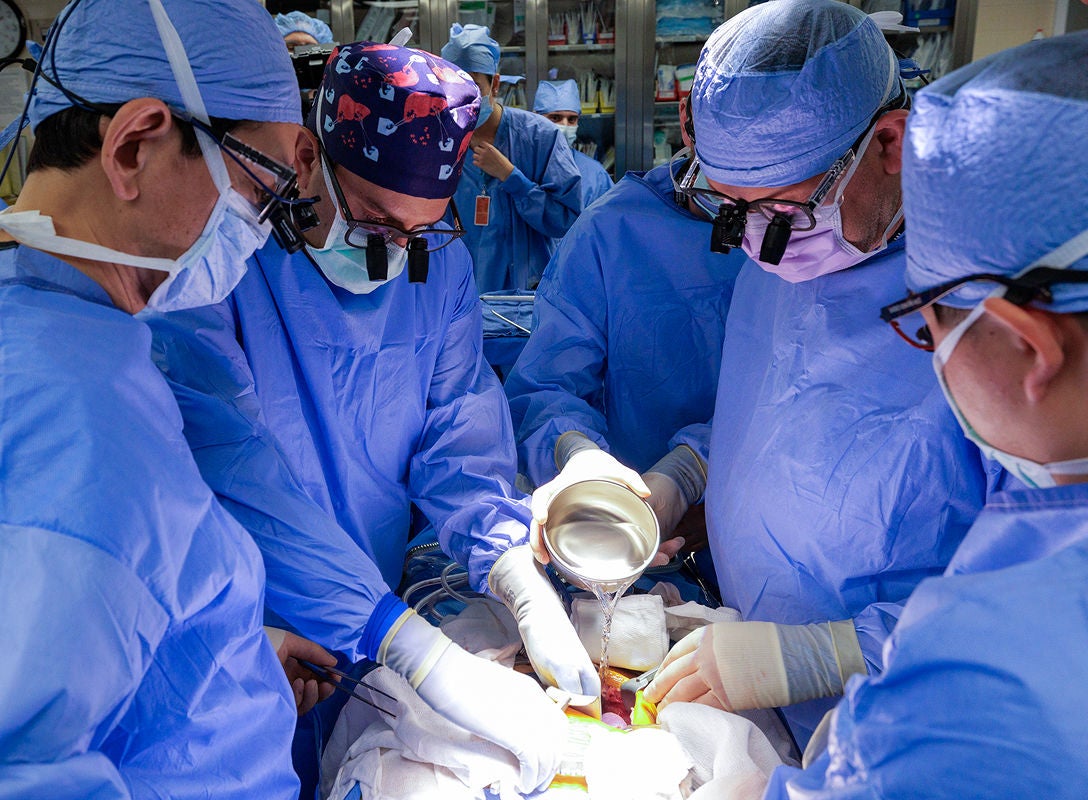
About our program
A pioneer in organ transplant since 1963, the Kidney Transplant Program at Mass General Brigham uses leading-edge technology to provide individualized care for patients with advanced kidney disease.
Why choose Mass General Brigham for kidney transplant care?
Mass General Brigham is home to one of the largest transplant research centers in the world, with cutting-edge technology and approaches such as protocols that enable transplant recipients to thrive without antirejection drugs.
Following kidney transplant, patients typically require lifelong immunosuppressive medications to prevent their immune systems from attacking the new organ. However, our groundbreaking research is allowing some patients to live drug-free after transplant.
Our living donor kidney team at Mass General Brigham performs more living donor kidney transplants than any other center in New England. We offer a variety of resources to support patients pursuing living donation, including monthly coaching sessions on how to find a living donor, ways to prevent financial burden, and a robust paired-kidney exchange program for incompatible living donor pairs.
Our physician-scientists at Mass General Brigham have over 30 years of experience pioneering xenotransplantation. We are harnessing cutting-edge science to enhance the compatibility of pig kidneys with the human body, making pig-to-human transplants safer than ever. This innovative approach offers renewed hope to those awaiting life-saving kidney transplants.
For current and prospective patients interested in more information about xenotransplantation at Mass General Brigham, please visit www.mghxenotransplant.org.
What to expect
Kidney transplant at Mass General Brigham
- Referral: Once your doctor makes a referral, the transplant team will contact you to make an appointment. Patients can self-refer by requesting an appointment by phone or web-based form.
- Evaluation: The process starts with an evaluation appointment, which includes gathering your medical history, a physical exam and minimal initial tests.
- Selection: Your evaluation is reviewed by a committee to determine if you are eligible for a transplant.
- Waitlisting: If your evaluation is approved, your name is added to the national deceased donor waitlist (UNOS) and living donor search starts. Learn more about UNOS waiting list
- Readiness: As you move towards the top of the waitlist, approaching your anticipated organ offer date, OR if you have an approved living donor, it's time to get ready.
- Transplant: When there is a match, the team will help you prepare for your transplant.
- After transplant: After your transplant, you'll work with the transplant team to create an action plan for your ongoing care.
Frequently asked questions
During the initial evaluation, patients will:
- Review a kidney transplant education video
- Undergo blood testing
- Meet in-person with their nurse coordinator, nephrologist, social worker, and patient navigator
- Set up an appointment to meet virtually with the dietitian and financial coordinator
If you are also a candidate for pancreas transplantation, you will be evaluated for both transplants at the same time.
As often as possible, our team aims to complete an evaluation for early kidney transplant within two weeks of receiving a referral or appointment request. Early transplant allows for patients to accrue time on the national waitlist as soon as possible and avoid dialysis.
After the initial visit, you will return for additional testing, which may include, cardiac stress testing, chest X-ray and electrocardiogram (EKG), additional blood and urine tests, and abdominal imaging. Patients may be asked to schedule tests with their primary care physician and/or other specialists, such as a colonoscopy (age 45+), mammogram (age 40+), or pap smear. Alternatively, if these tests have been performed within the past year, patients can simply provide the recent results.
Once all testing is complete, the Mass General Brigham transplant team will determine the patient’s readiness for a kidney transplant and outline the next steps.
Patients without a living donor are placed on the national deceased donor waitlist. Because there are many more people in need of a kidney transplant than there are kidneys available, patients may wait on the list for few years. As time progresses, patients move to the top of the list and receive a kidney.
When a deceased donor organ becomes available, you will receive a call from our coordinator or surgeon, asking you to come into the hospital for the transplant. Since this call can come at any time, you should provide our center with all of your phone numbers, as well as the phone numbers of a few emergency contacts, so that we can contact you when needed.
Related conditions and treatments
- Kidney Failure
- Renal Insufficiency
- Polycystic Kidney Disease
- Lupus
- Diabetic Kidney Disease (Diabetic Nephropathy)
- Glomerulonephritis
- Immunoglobulin A (IgA) Nephropathy
- Nephrotic Syndrome
- Glomerulosclerosis
- Renal Vascular Disease
- Analgesic Nephropathy
- Kidney Transplant
- Liver Transplant
- Kidney Transplantation
- Hemodialysis
- Peritoneal Dialysis (PD)
- Arteriovenous (AV) Fistula for Dialysis
- Home Hemodialysis (HHD)
- Automated Peritoneal Dialysis
- Continuous Ambulatory Peritoneal Dialysis
- Kidney Transplantation in Children
- Creating a Hemodialysis Access
- Peritoneal Dialysis Catheter Placement
Contact the Kidney Transplant Program
Brigham and Women's Hospital
617-732-6866
Massachusetts General Hospital
877-644-2860