Life Without Limitations: One Teen's Recovery from a Spinal AVM
At first, it seemed like a routine sports injury for Syed, then 14 years old. But within hours, his symptoms revealed something far more serious.
Syed was playing basketball at school one morning when he took a hit to the head. Soon after, he felt dizzy.
His condition quickly spiraled downward. He began vomiting violently. Then came the excruciating back pain. Soon he couldn’t even walk.
Syed’s mother, Syeda, a hospitalist at a hospital near their Illinois home, rushed him to the emergency room (ER). There, a doctor concluded Syed had suffered a concussion and attributed the back pain to a spasm. Syed was given a shot of pain medication and discharged.
As he and his family would soon learn, Syed in fact had a spinal arteriovenous malformation (AVM). This condition, marked by a tangle of abnormal blood vessels near the spinal cord, can be fatal.
Syed’s family’s search for a cure eventually took them to Boston, home to the Mass General Brigham Neuroscience Institute—and one of the world’s foremost experts on treating spinal cord and brain AVMs.
A diagnosis at last
A few days after the ER visit, it was clear something was wrong. Syed wasn’t walking normally, and his back pain was keeping him up at night.
Syeda took him to see a local orthopedic spine surgeon. The doctor said it was highly unusual for a young, athletic kid like Syed to have such intense back pain. He recommended Syed get another evaluation at the ER.
This time, an MRI scan found the spinal AVM. The condition is extremely rare—so rare that even Syeda, a long-time doctor, had never heard of it.
After conferring with medical colleagues, Syeda took Syed to see an interventional radiologist. He said he would treat the AVM with embolization. This procedure involves inserting a glue-like substance to block abnormal blood vessels, cutting off blood flow to the AVM.
The interventional radiologist said there was no rush to do the embolization. Syed could go on vacation with his family, finish the school year, and then return for the procedure in a few months.
Syed did fine on the trip. But a couple months later, his parents came back from the grocery store to hear guttural sounds coming from his bedroom.
“We ran upstairs and found him curled up on his bed,” Syeda said. “He was miserable. He had been vomiting and his back pain was so bad that he couldn’t even talk. We took him to the ER right away.”
At the ER, a battery of tests showed that Syed’s blood pressure was disturbingly high. He was transferred to a large hospital in a nearby city.
Searching for a neurosurgeon
At the hospital, an angiogram showed that in addition to the AVM, Syed had several spinal aneurysms. A spinal aneurysm is a bulge at a weak area in the wall of a blood vessel in or around the spinal cord. It puffs out like a small balloon and fills with blood. If that bulge ruptures, it can be deadly.
To stem blood flow to the area—and lower the risk of rupture—a neurosurgeon performed embolization on one of the aneurysms. Syed seemed to respond well. After two weeks in the hospital, he was discharged with slight weakness on his right side as his only symptom. The plan was for him to return in about eight months for another angiogram.
Still, Syeda was uneasy. She set out to find a neurosurgeon who specialized in treating AVMs and could provide a second opinion. Someone recommended that she contact Nirav Patel, MD. He is the founder and director of the Brigham and Women's Hospital AVM Program and recognized worldwide for his AVM expertise.
“Families like Syed’s often consult with multiple neurosurgeons before choosing one,” Dr. Patel said. “During this process, you’re going to get a lot of different opinions. That can make it hard for patients and families to decide which path is right for them.”
Syeda scheduled a virtual visit with Dr. Patel. As he explained, Syed had a conus AVM. This type of AVM occurs near the bottom of the spinal cord. It’s a delicate location and very hard to treat.
Despite the difficult nature of the conversation, Dr. Patel put the family at ease. “He was so kind. He listened to our story very patiently,” Syeda said. “I’ve never seen a neurosurgeon like him, treating us like his own family.”
Learn about AVM symptoms and treatments
A recommendation of surgery
Two months later, Syed traveled to Boston with his parents. The one neurosurgeon they had previously met in person spent about five minutes with them. Dr. Patel, in contrast, took his time explaining how the AVM could be treated and listening to the family’s concerns.
“He asked me to share my fears. I told him, ‘He’s a young kid with his whole life in front of him. We want to make sure we’re doing the right thing,’” Syeda recalled. “It was like talking with a counselor, which at that point was more important than talking with a surgeon. He ended up spending at least an hour and a half with us.”
Dr. Patel reviewed the results of Syed’s latest angiogram and MRI. He recommended surgery to treat the AVM.
“There’s a tremendous risk in leaving a spinal AVM untreated. But there’s also a tremendous risk with surgery, including paralysis and significant rehabilitation afterwards,” Dr. Patel said. “But in young people, surgery can offer an advantage because they’re better able to bounce back. You have an opportunity to give them back a normal life.”
With the approval of Syed and his parents, the surgery was scheduled for later that week.
A restless night
Syed struggled to sleep the night before the operation. “I was scared,” he said. “I was afraid I might not be able to walk or might not even make it out of surgery.”
The surgery took place in a special operating room at Brigham and Women’s that supports both high-end imaging (in the form of angiograms) and microsurgery (the use of high-powered microscopes and tiny instruments).
I have no words to describe how grateful we are. When this first happened, I thought I would never smile or enjoy life again. Dr. Patel has given us our life back.
Syeda
- Syed’s mother
With conus AVMs, the arteries feeding blood to the AVM are located along the anterior (front) and posterior (back) of the spinal cord. Since it is not directly accessible via the patient’s back, the anterior requires some creativity to reach.
Dr. Patel previously discovered a workaround that he used in Syed’s case. It involves releasing the spinal cord from the ligaments that hold it in place and then rotating the spinal cord to access the anterior.
The maneuver fully exposed the anterior spinal artery. This artery is a key source of blood for both the conus AVM and the spinal cord. The trick is to identify which branches of the artery are going where. Those branches feeding the AVM must be closed off, while those feeding the spinal cord must not be harmed.
Dr. Patel received assistance on this incredibly challenging task from senior surgical neurophysiologist Mitali Bose, MS, CNIM, and her neuromonitoring team. During the procedure, they ran tests to distinguish between branches that controlled vital functions and those that were feeding the AVM.
With their help—and the use of repeated angiograms—Dr. Patel was able to confirm when he had disconnected all the arterial branches feeding the AVM. Then he rotated the spinal cord back to its original position.
Over 12 hours after it started, Dr. Patel and his team completed the operation.
‘The toughest day of my life’
In the meantime, Syed’s parents had been waiting desperately for an update on their son’s condition.
“That was the toughest day of my life,” Syeda said. “I went to a chapel at the Brigham to pray, while my husband just wandered around the hospital worrying.”
Dr. Patel finally called around 9 p.m. to say Syed had woken up from the operation. Then he joined Syed’s parents to review how the surgery went. It was a success, but the road to recovery would be long and demanding.
Syed spent about 11 days each in the surgical intensive care unit and on a regular floor. During this period, he began physical therapy. Even so, by the time he was transferred to Spaulding Rehabilitation Hospital Boston, he was still wheelchair-bound due to leg weakness.
Jennifer Chinn Wu, MD, a physiatrist and medical director of Spaulding’s Inpatient Pediatric Rehabilitation Program, oversaw Syed’s rehabilitation. He had four to five hours of physical therapy each day along with less intensive occupational therapy, which focused on stretching and getting back to day-to-day activities.
Syed progressed rapidly at Spaulding Rehabilitation. Within a week, he had traded his wheelchair for crutches. Then he began walking longer and longer distances—first on his floor, and then outside. Rehabilitating alongside other people his age, some of whom were also Dr. Patel’s patients, raised his spirits.
After three-and-a-half weeks at Spaulding Rehabilitation, Syed was cleared to go home.
Making steady progress
One year post-surgery, Syed continues to do physical therapy several times a week. Despite having a little numbness in his right leg, he is making steady progress. He got his driver’s license soon after turning 16—a highly anticipated milestone—and is playing tennis again.
Moving forward, Syed will have an MRI (which will be done near his home) as well as a virtual visit with Dr. Patel each year.
“There can be recurrence in pediatric AVM, so we will keep a close eye on Syed,” Dr. Patel said. “I follow patients like him for a lifetime so I can track how they’re doing for my records and to reassure them that they can do whatever they want to do. I want to make sure they don’t feel hindered in any way.”
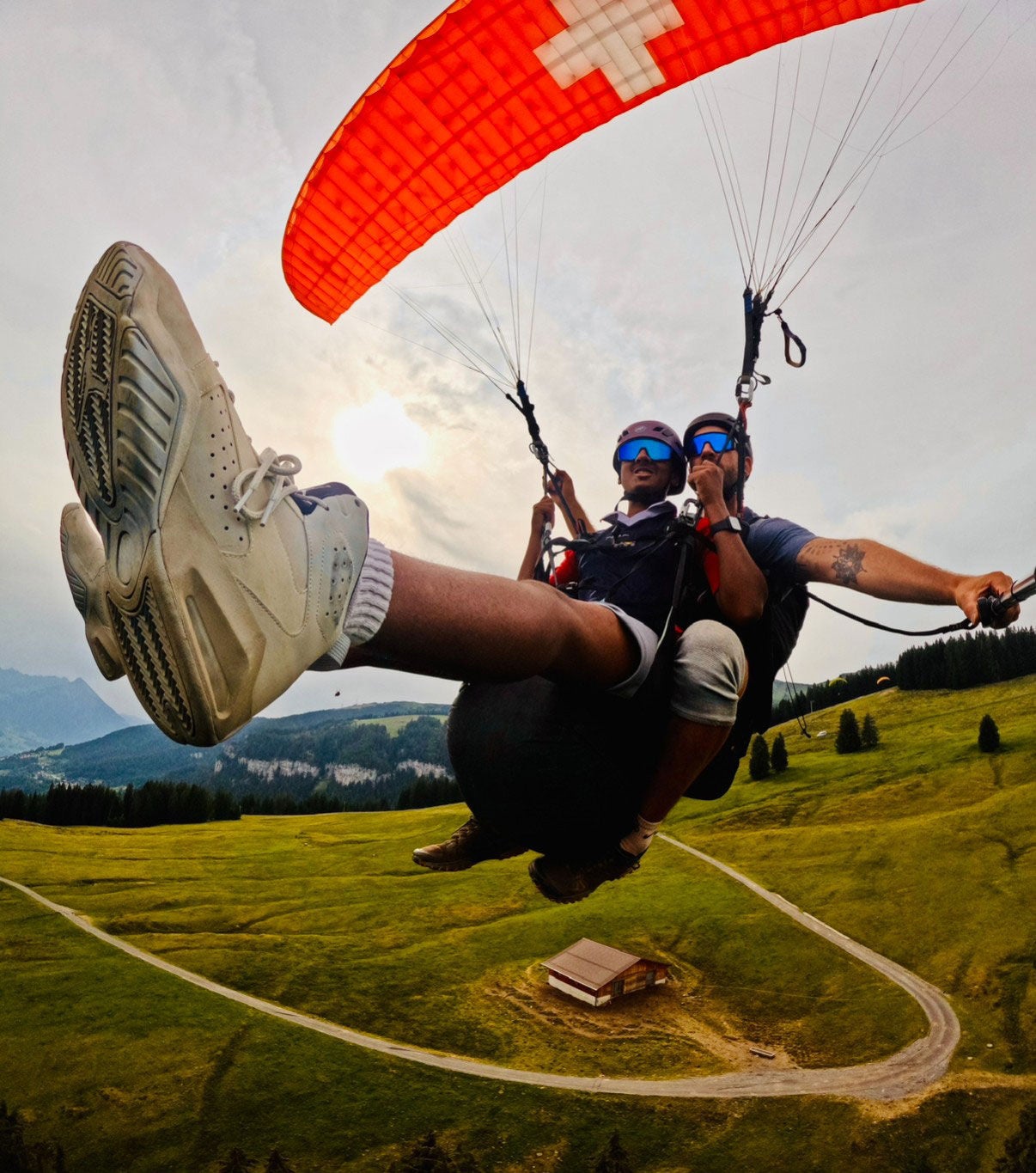
Indeed, since his surgery, Syed has taken up weightlifting and traveled to destinations as far away as India—two things some neurosurgeons had said would be impossible.
“I have no words to describe how grateful we are,” Syeda said. “When this first happened, I thought I would never smile or enjoy life again. Dr. Patel has given us our life back.”