Spine Surgery Program
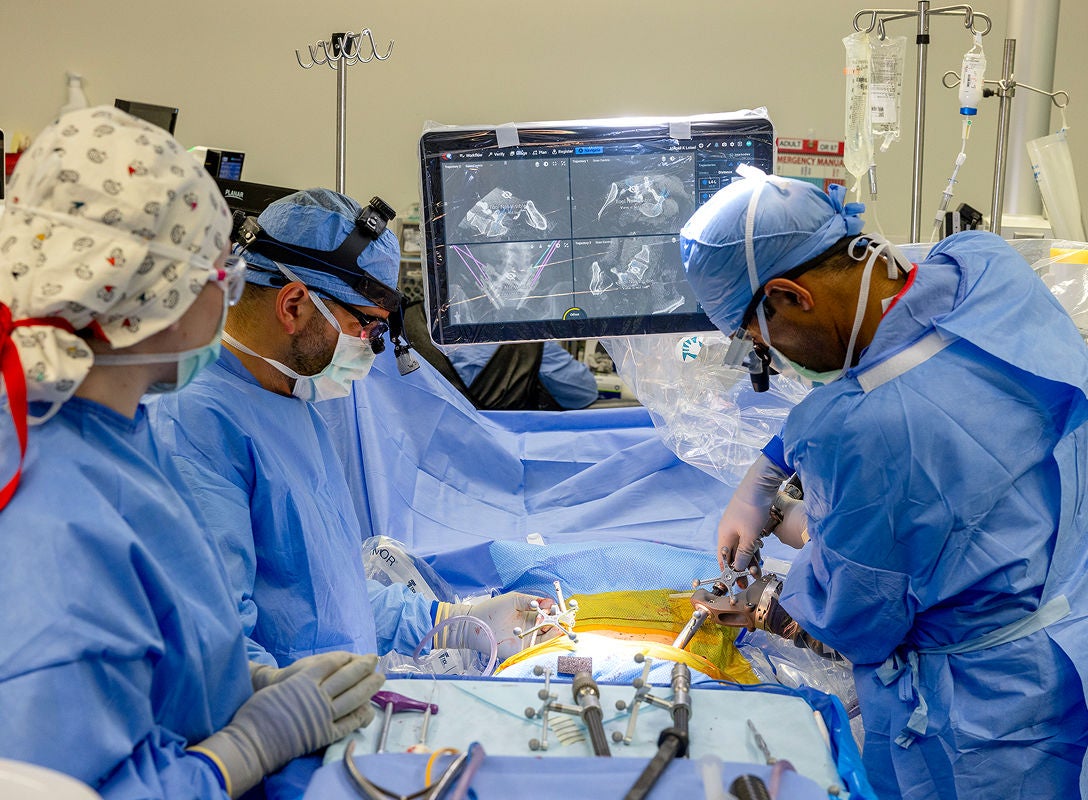
Renowned spinal surgery expertise
If a spinal disorder is causing ongoing pain, weakness, or loss of mobility, surgery may be part of your treatment plan. At Mass General Brigham, you receive care from nationally recognized spine surgeons who specialize in complex spinal disorders.
When appropriate, we offer minimally invasive spinal surgery, motion-preserving procedures, and advanced technologies such as spinal cord stimulation.
Our approach to effective spinal surgery
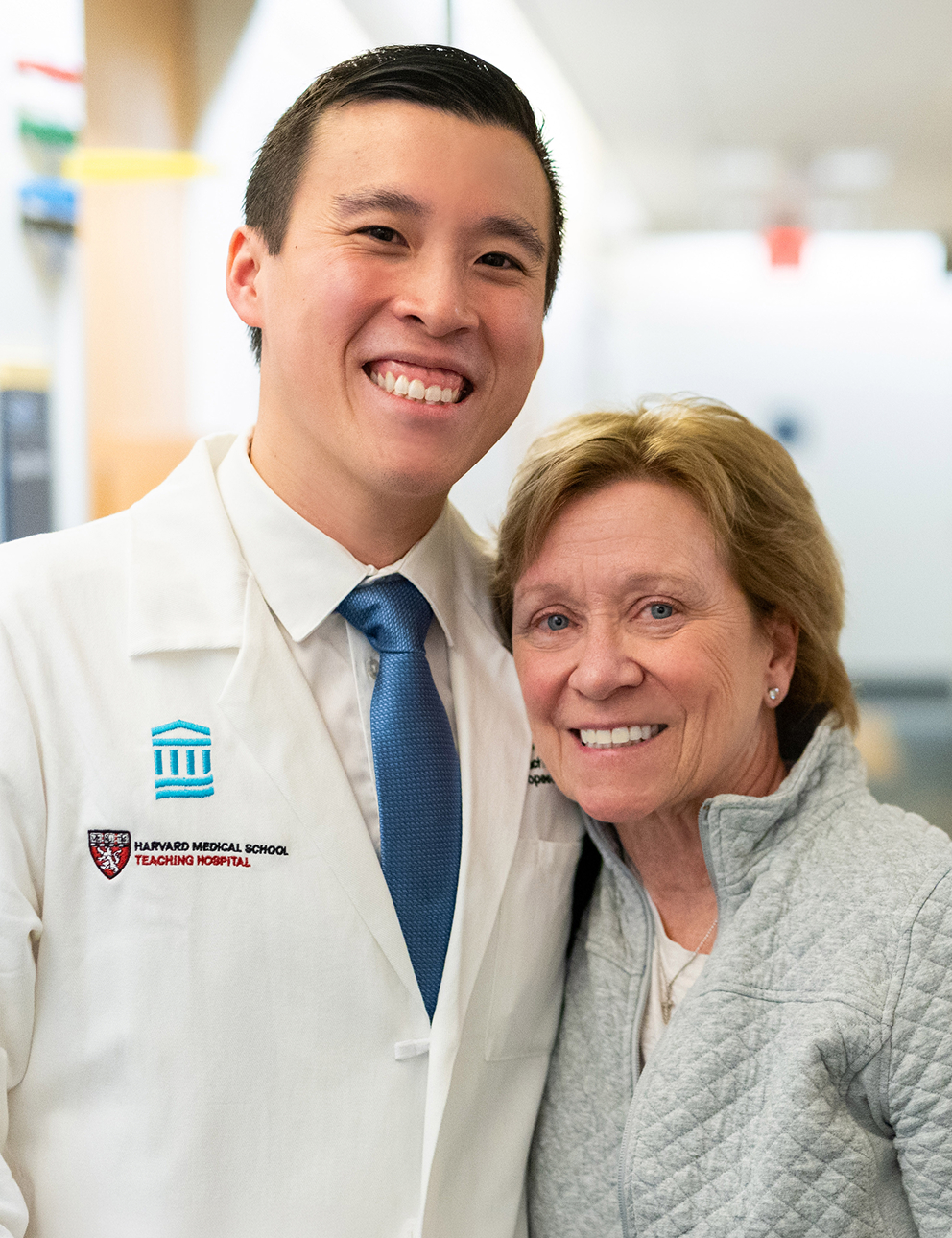
You receive care from internationally recognized spine surgeons at some of the best hospitals in New England. Our surgeons work with other team members to support every aspect of your care. Your multidisciplinary care team may include experts in:
We’re committed to providing safe, expert spine surgeries that positively improve your health and life. At Mass General Brigham, you benefit from:
- Conservative approach to treatments that always starts with nonsurgical options
- Surgeries using the latest technology and innovative surgical approaches
- Minimally invasive surgeries, including robot-assisted procedures
- Advanced surgical care informed by research in spine disorders and recovery
- Extensive experience in surgically treating complex cases
We have all the resources you need in one integrated health system. We make it easier for you to get presurgical, surgical, and postsurgical care closer to home. We offer:
- Appointments that fit your schedule, including virtual visits
- Coordinated care from diagnosis through surgery and recovery
- Convenient access to routine spine surgery at our community hospitals and complex surgeries at our academic medical centers
- Access to physical therapy and rehabilitation locations throughout New England
Our spine surgeons are internationally known for their spinal surgery expertise. The surgery type depends on your unique diagnosis. We offer:
- Spinal decompression, such as laminectomy and microdiscectomy, to take pressure off pinched nerves
- Spinal fusion surgery to stabilize the spine and ease nerve pain from degenerative disc disease
- Minimally invasive spinal surgery, which takes place through smaller incisions and may use robotic technology
- Motion-preserving surgery (arthroscopy), an alternative to spinal fusion that uses artificial discs
- Complex spinal reconstruction to correct spinal curvatures
- Spinal tumor surgery to remove tumors while using a specialized microscope to monitor spinal cord function
For select patients with severe, treatment-resistant pain, we offer specialized procedures that target nerve pathways. Options may include:
- Dorsal root entry zone (DREZ) lesioning
- Microvascular decompression for trigeminal neuralgia
- Motor cortex stimulation
- Percutaneous cordotomy for cancer-related pain
- Percutaneous rhizotomy
- Spinal cord stimulation
Related conditions and treatments
- Spinal Cord Injury
- Lumbar Spinal Stenosis
- Degenerative disk disease
- Herniated Intervertebral Disc
- Scoliosis
- Sciatica
- Neck Pain
- Back Pain (Acute or Chronic)
- Kyphosis
- Spinal Cord Tumor
- Neurosurgery (Neurological Surgery)
- Minimally Invasive Lumbar Discectomy
- Laminotomy
- Lumbar Disc Replacement
- Cervical Disk Replacement Surgery
- Minimally Invasive Spinal Fusion
- Spinal Fusion
- Minimally Invasive Spine Surgery
- Spinal Cord Stimulation
Frequently asked questions
Our spine surgery specialists

Find a spine surgery specialist
Spine clinical trials and research

Explore our neuroscience research
Learn how neuroscience research informs patient care
Search clinical trials
Search open clinical trials for neurological conditions
Explore our orthopedics research
Learn how orthopedic research informs patient care
Contact Spine Surgery
Orthopedics
Mass General Brigham: 617-732-9687
Massachusetts General Hospital Spine Center: 617-724-8636
Brigham and Women's Hospital: 617-732-5322
Mass General Brigham Medical Group Newton-Wellesley Hospital Spine Center: 617-243-5777
Wentworth-Douglass Hospital: 603-742-2007
Neurosurgery
Brigham and Women's Hospital: 617-732-6600
Massachusetts General Hospital: 617-726-2937