
AI Tool Proves Useful in an Array of Use Cases
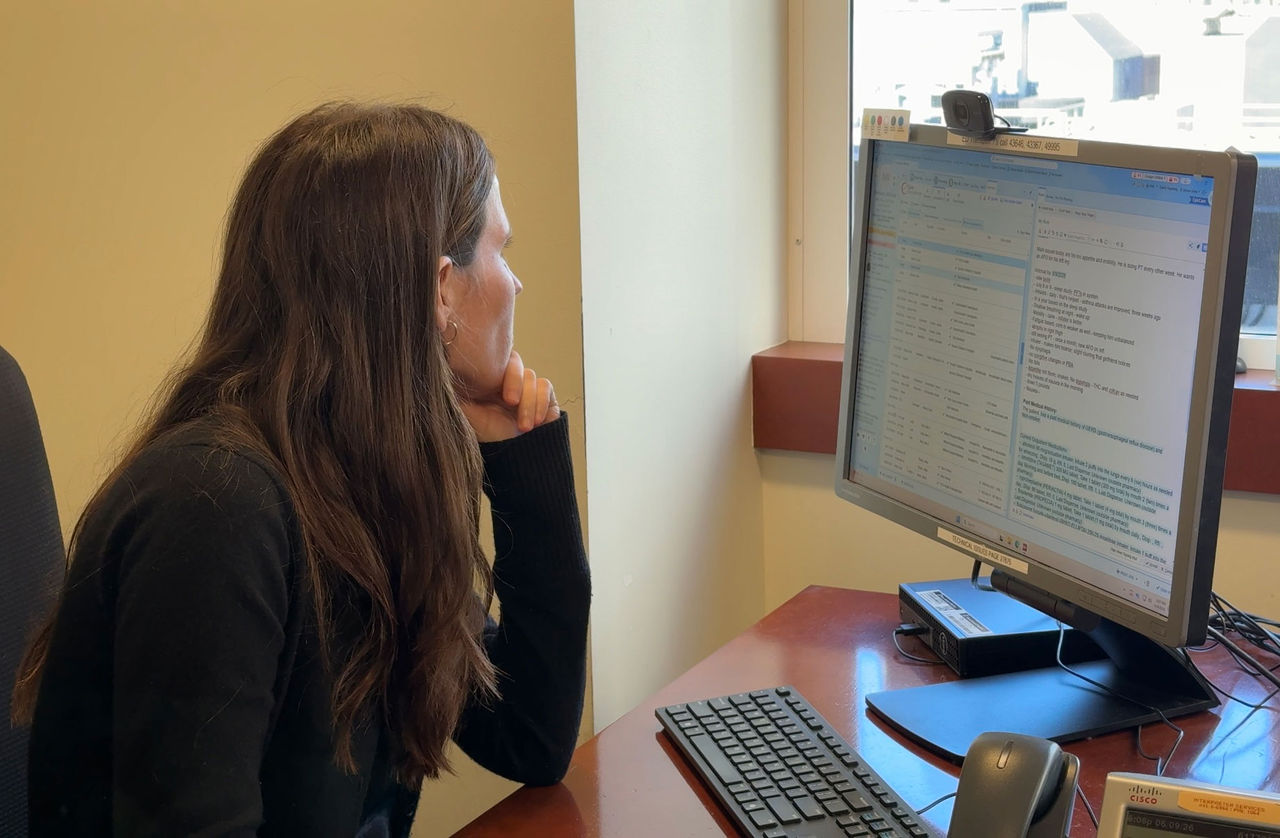
In December 2025, Mass General Brigham announced the spinout of AIwithCare. AIwithCare is a company founded by researchers from Mass General Brigham who developed an artificial intelligence (AI) tool to screen for patients’ eligibility for clinical trials.
Dubbed RECTIFIER (RAG-Enabled Clinical Trial Infrastructure for Inclusion Exclusion Review), the tool was developed by Alexander “A.J.” Blood, MD, MSc, who serves as director of the Accelerator for Clinical Transformation at Mass General Brigham, cardiologist in the Heart and Vascular Institute at Mass General Brigham and AIwithCare’s co-founder and CEO, and Sandy Aronson, who is the former executive director of IT and AI at Mass General Brigham Personalized Medicine, current Digital Research principal architect for Mass General Brigham and co-founder, president and chief AI officer for AIwithCare.
“We built this tool to help researchers find patients faster, which helps them enroll patients faster, which ultimately helps them get their clinical trial completed faster,” said Blood. “Getting the clinical trial completed faster accelerates science.”
The tool has quickly been adopted by the research community at Mass General Brigham, and its benefits are now being seen in other applications.
“Most of our initial users were researchers, the core use case being pre-screening for clinical trial eligibility,” said Carly Mailly, who serves as interim director of Digital Research AI and Genomics at Mass General Brigham, director of program management for the Accelerator for Clinical Transformation at Mass General Brigham and is a co-founder of AIwithCare. “But across Mass General Brigham, we are seeing adopters in other areas who are coming up with new and innovative use cases for the tool.”
RECTIFIER as it was originally envisioned: Identifying patients for clinical trials
Neurologist Jennifer Morganroth, MD, MBA, who works in the Sean M. Healey and AMG Center for ALS, uses RECTIFIER to help identify patients with ALS who might be eligible to participate in clinical trials.
“For people living with ALS, time is everything. Many trials have eligibility windows tied to symptom onset, breathing measures and functional scores that can close within weeks. Our clinic team has always worked hard to connect patients with research, but much of the information that determines eligibility lives in clinical notes and often comes together only after a visit. If we can understand a patient’s research options before they arrive, we can make the most of the time we have with them in clinic, when they and their families are right there with us,” she said. “What makes ALS care special at a center like ours is also what makes pre-screening complex; we have many trials running at once, often with overlapping criteria. Rather than using RECTIFIER for a single study, we ask a broader, more patient-centered question: Across everything we have to offer, which opportunities are available and might be right for this person?”
To find the information they are looking for, Morganroth and her team have developed a prompt that asks RECTIFIER to review clinical notes to identify variables most relevant to ALS trial eligibility, such as symptom onset, slow vital capacity and ALSFRS-R (a functional rating scale). The tool then integrates the information with structured Epic (Mass General Brigham’s electronic medical record) data, such as age.
“Before clinic, it helps us quickly understand who may be a candidate for one or more trials, who may need a closer look and who is clearly not eligible at that time,” she said. “We built the workflow conservatively. RECTIFIER surfaces more information than we choose to act on automatically, but we automate only the most reliable variables and leave more judgment-dependent criteria to the clinical team. A patient is only set aside when they clearly do not meet a criterion, and in our preliminary experience, the tool has not excluded an eligible patient on its own. The clinician always confirms eligibility, especially because breathing and functional measures are reassessed in clinic that same day. However, that head start changes the conversations we can have. For patients who may be candidates, our research nurses can talk with them while they are still with us and follow up soon after if there is more to discuss. And when someone is not eligible for a clinical trial, we can still have a meaningful conversation about studies on the horizon, expanded-access programs or observational research. The goal is that no patient leaves clinic without knowing what may be possible for them.”
Morganroth says RECTIFIER has proved itself to be extremely useful in her clinic, but it took substantial effort to get it up and running. She says it really only works because of the people — the physicians, nurse practitioners, nurses, research coordinators, access and scheduling teams, and patients and families — who have come together around this technology.
“We had to validate prompts through expert review, build logic to safely interpret outputs and ensure the results fit seamlessly into how our clinic actually operates,” she said. “RECTIFIER does not replace clinical judgment. Rather, it supports the team by helping communicate, in real time, relevant information to patients about which trials they may be eligible for.”
Thinking outside the box: Population Health
Marian McPartlin is the manager of Operations for the Mass General Brigham Population Health Cardiovascular-Kidney-Metabolic (CKM) Program within Mass General Brigham’s Population Health Services Organization (PHSO). Samantha Subramaniam is a project manager on her team. The pair was first introduced to RECTIFIER when they were working with Blood on a heart failure grant that needed to enroll 500 patients. Today, under the PHSO, they are using RECTIFIER to identify patients with heart failure who would benefit from remote treatment.
“We were wasting a lot of manpower manually looking over record after record to find patients to outreach to. We were under the pressure of meeting deadlines, and it was getting quite daunting,” said Subramaniam. “RECTIFIER, once we tested it and validated that it would work for us, has really streamlined the process.”
The team developed a series of 15 questions that RECTIFIER uses to review patient records in Epic. When given a list of 200 to 300 patient records, the tool can return a whittled-down list of patients who meet their criteria in as little as an hour. For reference, an experienced navigator would need roughly 20 minutes to review one record manually.
McPartlin says identified records are then reviewed by her team and providers are contacted to confirm it is appropriate for the CKM team to reach out to the patient.
“The benefit is the speed with which we can comb through medical records,” said McPartlin. “But the human in the loop remains the key. We have to ensure we are communicating appropriately with the primary care providers we support and that we are approaching patients in the right manner, being sensitive to the fact that a heart failure diagnosis is a scary term.”
In the clinical setting: Pediatric Gastroenterology
Pediatric gastroenterologist Christopher Moran, MD, is another early adopter of RECTIFIER. His clinic has been using the tool in their referral triage process.
“We’ve found that the information provided in referrals wasn’t getting us the information that we needed,” he said. “At times, we’ve had staff reviewing referrals to identify patients at high risk for disease progression (or avoidable emergency department utilization), but that wasn’t practical as referrals were increasing. We thought an AI review could help.”
When designing their workflow using RECTIFIER, Moran and his team chose to focus on patients who had already scheduled a new patient visit.
“Once a week, we screen all of the charts related to patients who have booked an initial appointment. We are largely trying to identify patients likely to have eosinophilic esophagitis, celiac disease and inflammatory bowel disease — conditions where delays in diagnosis can have negative consequences,” he said. “We created ‘high-risk’ questions for RECTIFIER to answer. I go in to quickly review any positive hits. For those with positive hits, we flag them as needing an urgent appointment.”
Moran says the new process is having a positive impact on patients and their families.
“We’ve been able to identify several patients who really needed to be seen earlier than the standard process allowed,” he said.
Looking ahead: AIwithCare Studio
More than 30 teams within Mass General Brigham are currently using an enterprise app version of the RECTIFIER tool. Soon it will become more easily accessible to researchers, operational teams and clinicians via the AIwithCare Studio platform, which will make RECTIFIER’s capabilities more widely available within Mass General Brigham and to other health systems.
“Our mission has always been about accelerating science and bringing the power of AI to clinical research,” said Blood. “To see our tool making a difference in other areas of healthcare is incredibly inspiring. The fact that it can be scaled and used to improve clinical care is a testament to the creativity and dedication to patient care that exists here at Mass General Brigham.”
Interested in learning more about RECTIFIER and other AI tools for research at Mass General Brigham? Contact MGB Digital Research AI.
About Mass General Brigham
Mass General Brigham is an integrated academic health care system, uniting great minds to solve the hardest problems in medicine for our communities and the world. Mass General Brigham connects a full continuum of care across a system of academic medical centers, community and specialty hospitals, a health insurance plan, physician networks, community health centers, home care, and long-term care services. Mass General Brigham is a nonprofit organization committed to patient care, research, teaching, and service to the community. In addition, Mass General Brigham is one of the nation’s leading biomedical research organizations with several Harvard Medical School teaching hospitals. For more information, please visit massgeneralbrigham.org.