Spider Veins vs. Varicose Veins

As you get older, your veins often become more visible beneath the surface of your skin. It’s a normal part of aging, but certain conditions can make your veins especially prominent and can even cause pain or other medical issues.
Two common vein conditions are spider veins and varicose veins. While they share some similarities, there are important differences.
“Spider veins are usually a cosmetic concern and don’t require treatment, whereas varicose veins can be more of a medical issue,” explains Sherry Scovell, MD, a vascular surgeon with the Mass General Brigham Heart and Vascular Institute. “There are lifestyle changes you can make to reduce the appearance of both, but we have medical treatments, too.”
Dr. Scovell cares for patients at Massachusetts General Hospital. She explains the difference between spider veins and varicose veins, including how they look, their causes, and treatment options.
How to tell the difference between spider veins and varicose veins
Spider veins are clusters of damaged blood vessels beneath the skin. They’re thin lines that usually form a web-like shape and are red, blue, or purple in color. They may be flat (meaning you can’t feel them when you touch your skin) or slightly raised. Spider veins are common on the legs or thigh, but they can also appear on the face or anywhere on the body.
Varicose veins are usually larger than spider veins. They’re swollen veins that appear twisted and rope-like under the skin. They’re more raised (or “bulging”) than spider veins. Varicose veins are usually purple or blue in color and form on the legs, ankles, and feet.
While there are visual differences, varicose veins are also more likely to cause symptoms than spider veins.
Signs and symptoms for varicose veins
- A heavy or aching feeling in your legs
- Itchiness or a burning discomfort around the veins
- Pain or soreness, especially behind your knees
- Swelling
- Leg cramps at night
- Skin discoloration around the area of the vein
- Open sores (ulcers) or bleeding near the vein. Call your provider right away if you experience this, as it can lead to infection and requires treatment.
Signs and symptoms for spider veins
Most people with spider veins don’t experience any symptoms. In rare cases, you may experience:
- Burning, itching, or mild pain near the vein
- Leg cramps
- Tired, achy, or heavy legs
What causes spider veins?
Spider veins occur when the small veins beneath the surface of your skin are damaged. Many people develop some form of spider veins in their lifetime.
The exact cause of spider veins is unknown. Certain factors increase your risk, such as:
- Having a family history of spider veins
- Having overweight or obesity
- Smoking (find tips to quit smoking)
- Sitting or standing for long periods of time
- Being a woman or person assigned female at birth. Your risk also increases if you become pregnant or have multiple pregnancies.
- Having a history of venous thromboembolism, like deep vein thrombosis or pulmonary embolism, where a blood clot forms in a vein
- Experiencing an injury or trauma
What causes varicose veins?
Varicose veins form when the valves inside your veins weaken and stop functioning, causing blood to back up in that vein. Then the veins begin to stretch and bulge.
This happens because your vein walls or the valves inside your veins become weaker. These valves open and close to direct blood back to your heart. When they don’t work properly, blood can move backward due to gravity and pool in your veins (called chronic venous insufficiency).
Different factors can increase risk of varicose veins, such as:
- Family history of varicose veins
- Aging
- Female hormone treatments, such as birth control pills
- Smoking
- Overweight or obesity
- Pregnancy. Your risk increases with multiple pregnancies.
- Sitting or standing for long periods
Comparison of spider veins and varicose veins.
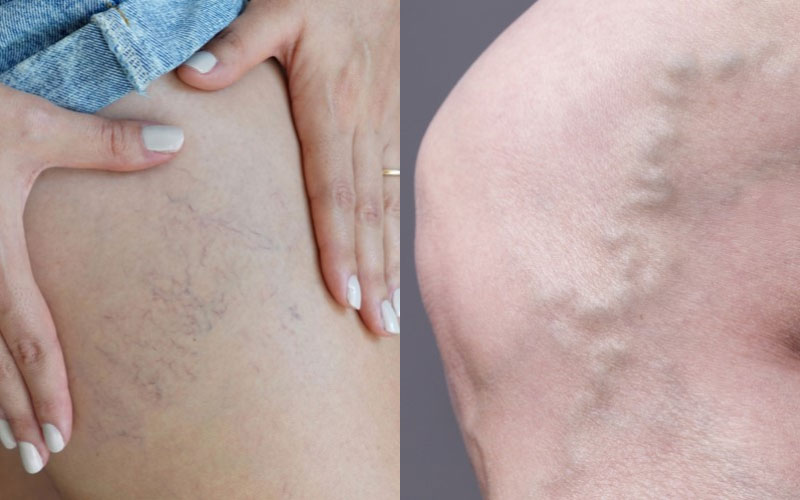
Spider veins (left) are thinner and may be flat or slightly raised. Varicose veins (right) are larger, rope-like, and bulge beneath the skin.
Whether you have spider veins or varicose veins, talk to a provider if you’re worried about them. Even if you don’t have symptoms, we can help make sure you don’t have any underlying conditions and discuss possible treatments.
Sherry Scovell, MD
- Vascular Surgeon, Mass General Brigham Heart and Vascular Institute
Spider vein treatment
Since spider veins often don’t cause symptoms, you can make lifestyle changes to reduce their appearance and prevent new ones from forming.
However, you may choose medical treatments to treat your spider veins, or your provider may recommend it. These include:
- Sclerotherapy. A provider injects a foam or liquid into the spider vein, which creates irritation on the inside of the blood vessel and causes it to close. The reticular veins, which feed into spider veins, fade as the body absorbs them naturally. It may take a few weeks to disappear, and you may need more than one treatment. You also need to wear compression stockings for 2 weeks after the procedure.
- Laser treatments, usually for spider veins on the face or smaller spider veins where sclerotherapy isn’t an option. A provider uses a laser light to heat the blood vessels without damaging your skin. This destroys the spider vein and causes it to fade. Larger spider veins often take longer to disappear and may require additional treatment sessions.
People with spider veins may also have varicose veins. If this is the case, Dr. Scovell recommends treating the varicose veins first, as they put pressure on the smaller veins.
Varicose vein treatment
Lifestyle changes also help symptoms from varicose veins, but your provider may recommend procedures to remove them. This helps reduce symptoms, improves your blood flow, and prevents more serious complications.
Treatment for varicose veins may include:
- Sclerotherapy. This same procedure used for spider veins can also treat smaller varicose veins.
- Endovenous ablation is a common treatment for larger varicose veins. It treats superficial veins that are slightly deeper under the skin but cause the varicose veins that are visible. A physician numbs the area and inserts a flexible tube (called a catheter) into the affected vein. They close the vein by injecting a small amount of glue, chemical, or foam solution, or by using heat or laser energy. This redirects blood flow and causes the vein to close.
- Phlebectomy. This treats varicose veins that are visible under your skin and may happen at the same time as ablation. With this procedure, a physician numbs the area and makes a small poke over your varicose vein. They then use a hook-like device to remove the vein.
“Whether you have spider veins or varicose veins, talk to a provider if you’re worried about them,” Dr. Scovell recommends. “Even if you don’t have symptoms, we can help make sure you don’t have any underlying conditions and discuss possible treatments. We want you to feel comfortable in your skin.”