Young Adult With Congenital Heart Disease Has Completed Three Marathons… and Counting
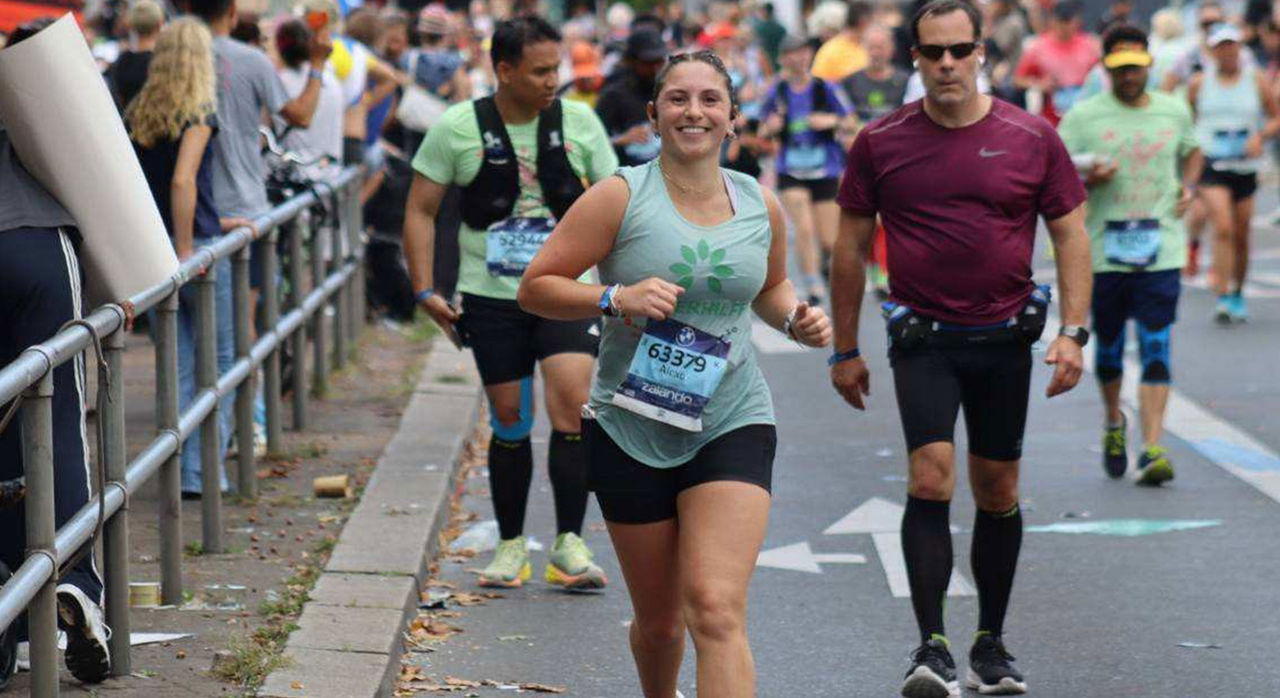
It's dangerous for people with congenital heart disease (CHD) to push themselves physically, right? Not necessarily. Alexa Hassan, 27, is proof of that.
Alexa, who grew up in Prospect, Connecticut, was born with tetralogy of Fallot. This rare heart defect limits oxygen flow to the body. At three months old, she had surgery to patch a hole in her heart and insert a valve in her right ventricle to improve blood flow.
The surgery was a success, and Alexa grew up with no physical limitations. In high school, she was an All-American with the cheerleading team and a member of the track and field team. She then participated in track and field as a student at UMass Boston.
After graduating college, Alexa got a job as a nurse in Boston. Her pediatric cardiologist recommended that she transition to a local adult CHD (ACHD) program and referred her to the Mass General Brigham Heart & Vascular Institute. Under the watch of Mass General Brigham cardiologist Doreen DeFaria Yeh, MD, she has since committed herself to exercising and completed three marathons.
"Dr. DeFaria and her team do such a great job," Alexa said. "I've had a really good experience with them, and I wouldn't want to be seen anywhere else."
Offering personalized, lifelong care
Dr. DeFaria is part of the Adult Congenital Heart Disease Program at Massachusetts General Hospital, an Adult Congenital Heart Association-accredited program recognized for meeting national standards in lifelong congenital heart care. The program offers personalized, lifelong care for adults like Alexa who were born with a heart defect. A wide range of ACHD specialists, including cardiologists, interventional cardiologists, cardiac surgeons, and others, work together to individualize care for each patient.
When they reach early adulthood, Dr. DeFaria stressed, patients should transition to the care of an ACHD specialist who will take the long view in managing their heart health.
"We're focused on all the things we need to do right now to ensure the patient's heart is as healthy as possible 60 or 70 years from now," Dr. DeFaria said. "That means doing a lot of work to monitor for, prevent, and manage complications that can happen decades after a childhood surgery, like heart failure, coronary heart disease, and high blood pressure. Managing people through pregnancy is also a big part of what we do."
Alexa started seeing Dr. DeFaria five years ago. At the time, Alexa went for walks and lifted weights at the gym. They had a lengthy conversation about the importance of exercise to long-term heart health. Dr. DeFaria suggested adding running to the mix.
"Years ago, we'd tell people with congenital heart disease not to push it and to avoid high-intensity exercise. Unfortunately, that led many people to become overweight or obese, and their hearts becoming deconditioned," Dr. DeFaria said. "In most cases, these patients can safely do much more than we realized then. They can run marathons, they can do triathlons. And we know that when they exercise earlier in life, their heart will be much healthier later in life. That's a message we really try to get across."
Running Boston an unforgettable experience
Alexa quickly adopted Dr. DeFaria's recommendation on exercise. She began running while also taking boxing, cycling, and yoga classes.
The next spring, she attended the Boston Marathon for the first time. Cheering on the thousands of participants passing by inspired her to want to run it herself.
"I was thrilled that she was so motivated to keep pushing her cardiovascular fitness," Dr. DeFaria recalled. "We want to encourage congenital heart patients to exercise as much as they want to, safely."
To that end, the ACHD Program—in partnership with the Heart and Vascular Institute's Cardiovascular Performance Program—conducts specialized stress testing to check how the heart holds up to intensive exercise. If the patient does well, they can often exercise without limitations.
Dr. DeFaria and her team do such a great job. I've had a really good experience with them, and I wouldn't want to be seen anywhere else.
Alexa Hassan
- Patient
That was the case with Alexa, who ended up running the 2024 Boston Marathon along with several friends. She was nervous beforehand and battled through fatigue and pain through most of the race. That only made crossing the finish line that much sweeter.
"Once the adrenaline wore off and I got my medal, I could barely walk. My feet were bleeding and blistered so badly," she said. "It was a roller coaster of excitement and happiness along with dread and suffering. Though once you finish, you kind of forget about the bad stuff."
More marathons in her sight
Alexa couldn't wait to see Dr. DeFaria for her annual checkup that summer. She showed up wearing her Boston Marathon gear and medal. Dr. DeFaria greeted her with a huge hug.
"Nothing makes us happier than knowing our patients are accomplishing their goals. It's a wonderful feeling to empower people to live their best life," Dr. DeFaria said. "When she sent me photos after she finished the race, I almost cried. She's such an inspiration for patients who think they could never do that."
Since running Boston, Alexa and her friends have also completed the New York City and Berlin marathons. Their goal is to run the rest of the six original World Marathon Majors—Tokyo, London, and Chicago—in the next couple years.
Alexa, who now works as a pediatric cardiac nurse, finds special meaning in running.
"Yes, it's something I do for fun and as a hobby, but it's also a way for me to give hope to the children and families I care for," she said. "I talk to a lot of parents, and some children who are old enough, about my heart and my running. I also cite (ex-professional snowboarder) Shaun White as someone else with tetralogy of Fallot who is a great success story."
Good habits will pay off
Moving forward, Alexa will continue to see Dr. DeFaria once a year. Dr. DeFaria stays up to date on the latest guidelines for managing patients with tetralogy of Fallot, while Alexa has various tests each year to make sure her heart is healthy.
Like most adults with tetralogy of Fallot, Alexa likely will need to have her pulmonary valve replaced one day. Due to her cardiac and overall health, however, Dr. DeFaria believes she won't have to worry about that for many, many years.
"I'm really proud of her," Dr. DeFaria said. "Running a marathon is an amazing achievement. But what's even more remarkable is her consistent dedication to her health and the habits she has developed that will benefit her decades down the line."
Alexa Hassan holds up her medal after a marathon.
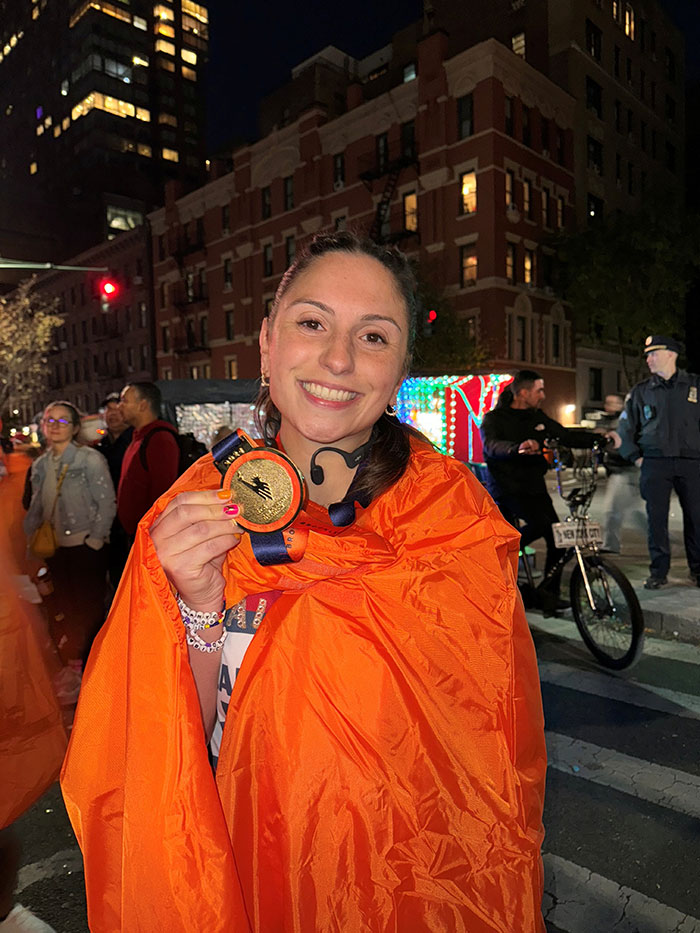
Alexa holds her marathon medal