
From Community ER to Academic ICU, Advanced Cardiac Care Helps Patient Survive 'Widowmaker' Heart Attack
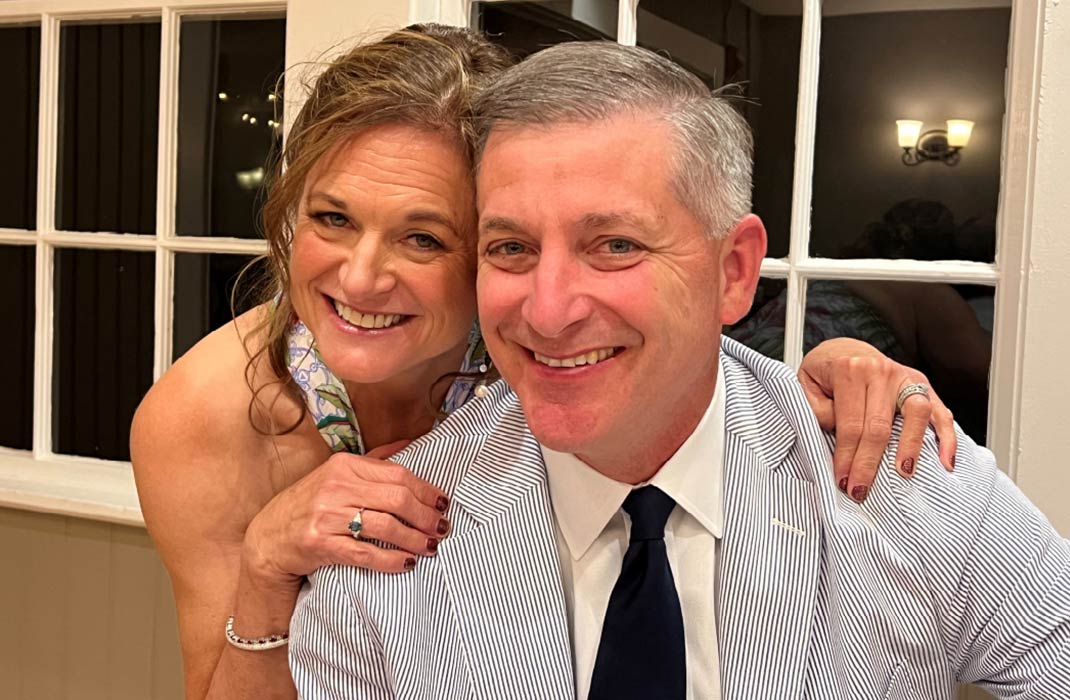
"Everything had to go exactly right for me to survive. It didn't have anything to do with luck."
Bill Deptula
"He said, 'I think you're having a heart attack. We're going to take good care of you,'" Bill recalled. "That was the last thing I remember until I woke up in Boston three days later."
The perfect candidate for the Impella
According to Dr. Imbrie, Bill came very close to dying in the woods. His condition, which had stabilized somewhat by the time he got to the ER, quickly spiraled downward.
The blockage in his artery caused his heart to go into cardiogenic shock (the most severe form of heart failure). With this potentially life-threatening condition, the heart cannot pump enough blood to support the needs of the body's organs. He also had ventricular tachycardia, a dangerously rapid heartbeat that led to cardiac arrest (when the heart suddenly stops beating).
"He lost his pulse and was critically ill," Dr. Imbrie said. "We had to shock him with a defibrillator about seven times to bring him back."
In situations like this, every minute counts. By getting him to the ER so fast, Christine gave Bill a chance to survive. Now Dr. Imbrie and his team moved just as urgently.
Bill was swiftly taken to the cardiac catheterization (cath) lab, where Dr. Imbrie inserted a stent in his LAD artery to restore blood flow. Nevertheless, Bill continued to decline. Dr. Imbrie immediately recognized the gravity of the situation.
"We could tell he was unlikely to recover without temporary support from a mechanical device such as the Impella CP," Dr. Imbrie said. "He's precisely the type of patient we had envisioned when we started the Impella program."
Timely, advanced, specialized care in a community hospital
The Impella CP is a thin device measuring about five inches long. It is inserted through a small cut in the groin and threaded through the femoral artery into the heart. There, it helps the left ventricle pump blood into the aorta and out to vital organs throughout the body.
"The device takes over some of the work so that the heart uses less oxygen and can recover over time," Dr. Imbrie explained.
Dr. Imbrie and his team finished implanting the Impella within 45 minutes of Bill entering the cath lab. Right away, Bill showed signs of getting better. Although he wasn't in the clear quite yet, his outlook was much brighter.
Reaching that point reflected Wentworth-Douglass' investment in advanced cardiac care. While devices like the Impella are more commonly available at large academic medical centers like Mass General or Brigham and Women's Hospital, many community hospitals do not offer this level of support.
Wentworth-Douglass' Impella program reflects changing perceptions of what a community hospital should be, according to Dr. Imbrie.
"Traditionally, community hospitals have been seen as providing less specialized, less intensive care and unable to manage the sickest patients," he said. "Providing timely, advanced, specialized care on site leads to better outcomes, and our Impella program is an example of that."
Bill experienced that difference firsthand.
"Not so long ago, Wentworth-Douglass was a small, independent community hospital," he said. "Now it's part of Mass General Brigham, and I can get that higher-level care just 20 minutes from my house. I'm so fortunate to live where I do and to have access to this quality of care."
Even with early improvements, Bill would need additional support in the days ahead. On Saturday night, a couple hours after his arrival in the ER, he was transported via helicopter to Mass General in Boston.
Impella is removed, and recovery begins
At Mass General, Bill received care through the advanced heart failure service under the watch of cardiologist/heart failure specialist Guilherme Nasi, MD, who also practices at Wentworth-Douglass. The fact that both hospitals are in the Mass General Brigham system contributed to a seamless transition.
Over the next two days, Bill's heart function steadily improved. On Monday, he underwent a procedure to remove the Impella. He groggily woke up in the intensive care unit (ICU) the next day. A big golf fan, he asked a nurse who was leading in the Masters tournament, which had ended two days earlier.
"She said, 'What are you talking about? What day do you think it is?'" Bill recounted. "I told her it was Sunday, and she's like, 'No, it's Tuesday.' That's when I realized how much time had passed."
Despite missing the Masters, Bill had reason to be pleased. On Thursday, he was transferred to the cardiac step-down unit. There, he worked on regaining his strength so he could stand and walk on his own. On Saturday—just one week after his near-fatal heart attack—he was discharged from the hospital.
Lifestyle changes yield positive results
Several weeks after going back home, Bill began cardiac rehabilitation at Wentworth-Douglass three days a week. After a couple months, he moved to a center closer to home to complete his rehab.
Bill eased back into his job, returning full time about four months post–heart attack. Around the same time, he played his first round of golf of the year.
Watching out for his health has become an obsession for Bill, who admitted he hadn't always taken great care of himself.
"I'm committed to working out three or four times a week, I'm more attentive to what I eat and drink, and I've lost a bit of weight," he said. "And I still have to do yard work—I didn't get out of that for very long."
Since Bill's heart function has fully recovered, he has no physical limitations whatsoever. However, the emotional scars remain.
"I know that if Christine hadn't acted when she did, I wouldn't be here. There isn't a day I don't think about that," Bill said. "This was a traumatic event for me and my family. It was really hard on all of us."
Today, Bill continues follow-up care with Dr. Nasi and Dr. Imbrie at Wentworth-Douglass. The two doctors work closely together to coordinate his medications, blood work, and imaging—one of many things Bill appreciates about his care at Mass General Brigham.
"I'm grateful to have Dr. Nasi and Dr. Imbrie in my life. I consider them both friends, and I have enormous respect for their skills and intellect," he said. "In every stage of my care, from the initial incident through cardiac rehab, everyone at Mass General Brigham was incredibly talented and caring. It was everything you could want and hope for in healthcare."
Learn about Mass General Brigham Heart and Vascular services