Curing an Inoperable Arteriovenous Malformation
The moment something went terribly wrong in her brain, Katrina Arthur said, "It felt like I got hit in the back of the head with a sledgehammer."
Katrina, then 41, was working out at the gym when the pain struck. She quickly returned the weights to the rack and headed to her car. As she would later learn, she called her husband, Randy, from the car before passing out.
Randy arrived and took her to a hospital near their home in north central Connecticut. During a long wait in the emergency room, Katrina slipped in and out of consciousness and vomited several times.
Finally, she underwent imaging tests that identified the problem: a tangle of abnormal blood vessels in her brain known as an arteriovenous malformation (AVM) had ruptured. It is a serious condition that can be fatal. The AVM was a grade 3, which meant it would be risky to remove. (Grade 1 is the lowest risk; grade 5 is the highest.)
Katrina was admitted to the hospital and placed in the intensive care unit (ICU). The doctors were pessimistic about her prognosis (outlook).
"They told Randy it was inoperable," she recalled. "Because of the risk of another AVM rupture, they said I'd have to avoid physical activity for the rest of my life. No picking up or playing with my kids. Just sit and take it easy."
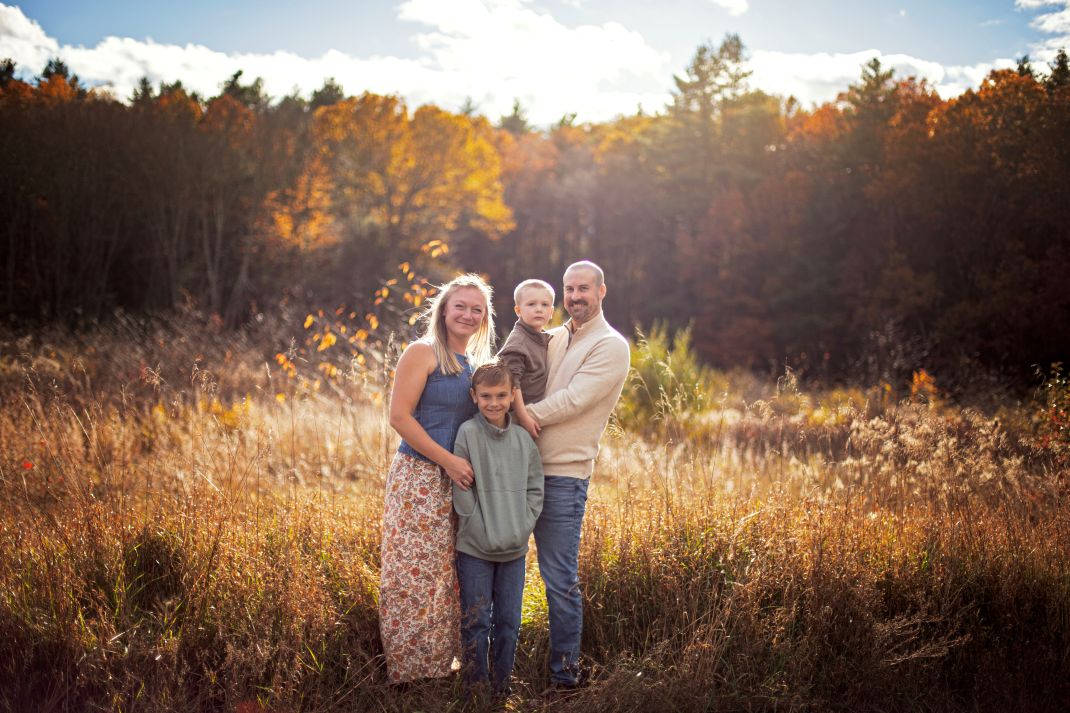
How a globally recognized AVM expert changed her prognosis
One morning, while waiting for the school bus with his two young sons, Randy half-jokingly asked the other parents if anyone knew a good neurosurgeon. One parent happened to be a former nurse at Brigham and Women's Hospital. On her recommendation, Randy called Nirav Patel, MD, a neurosurgeon at the Mass General Brigham Neuroscience Institute.
Known worldwide for his AVM expertise, Dr. Patel has performed many complex brain AVM surgeries since his fellowship training in the early 2010s. He is also the founder and director of the Brigham and Women's Hospital AVM Program, which includes neurosurgeons, neurologists, neuroradiologists, radiation oncologists, neurointensivists, and nurses. The program's goal is to provide the highest-quality care for each patient based on what they need and where they are in their life.
Upon reviewing Katrina's records, Dr. Patel was confident he could safely remove the AVM. This would give Katrina the best chance of never bleeding again and being cured. He has come across many patients who have suffered AVM ruptures and received similarly grim prognoses from their doctors.
"They're told their AVM can't be fixed and may rupture again," Dr. Patel said. "Because they're told they can't live a normal life, they stop exercising, lose interest in life, and may get depressed or develop obesity and diabetes. In these cases, the diagnosis often ends up being worse than the disease. We spend a lot of time trying to un-tell that story. You can live a normal life."
Katrina was transported via ambulance to the Brigham. There, she had detailed imaging scans done that would help Dr. Patel navigate her brain during surgery. But first, her care team had to get a new problem under control: vasospasm after subarachnoid hemorrhage (bleeding in the space between the brain and the tissues covering it).
An unconventional approach to treating AVMs
In the ICU, Katrina slowly felt better and more alert. However, she was also experiencing vasospasms, which narrow the arteries and reduce blood flow, heightening the risk of stroke.
For three weeks, her care team managed the vasospasms with medications. Katrina was not in pain but also had no interest in reading, watching TV, or using her phone. She saw Randy during the day and had video calls with their sons, aged 3 and 9, at night.
When the vasospasms finally stopped, Katrina was ready for the next step in her treatment. Most medical centers use a procedure called embolization to treat AVMs. This involves inserting a glue-like substance to block abnormal blood vessels, preventing blood flow to the AVM.
Dr. Patel, however, prefers open microsurgery when possible because it maximizes the chance of a cure. Though this option is more challenging for the surgeon when done without preoperative embolization, he believes it is safer for the patient in the long run when performed by a skilled neurosurgeon with high-volume experience. He is one of the few surgeons willing to offer open brain surgery on AVMs as complex as Katrina's.
After opening her skull to access the brain, Dr. Patel used a powerful microscope and tiny instruments to separate the AVM from the surrounding tissue. Throughout the surgery, his team monitored Katrina's motor, sensory, and other functions to make sure he wasn't damaging any nearby nerves.
"It's a team effort. I have all kinds of support in the operating room—other specialists along with fellows and residents," Dr. Patel said.
Once an imaging test called an angiogram confirmed the AVM was completely gone, the surgery was complete. All told, the process took about 13 hours.
Specialized postoperative care for complex AVMs that reduces stroke risk
Ever since the AVM ruptured, Katrina hadn't felt like herself. "But as soon as I woke up from surgery, it was like my essence had returned. I immediately felt like I was back," she said.
The first week following AVM removal is a critical period. The Mass General Brigham Neuroscience Institute takes an unconventional approach to postoperative care for AVMs, focusing on maintaining low blood pressure to reduce stroke risk. Specially trained neurological ICU nurses and neurointensivists are on hand for this purpose.
If not for (Dr. Patel and my care team), I wouldn't have a life that I would want to live. I feel lucky and optimistic, like I've gotten a second chance at life.
Katrina Arthur
- Patient, Mass General Brigham
Five days after surgery—and five weeks after arriving in Boston—Katrina was discharged. Rather than go home, she chose to recover in the calm of her mother's house for four weeks. Randy visited with the boys almost every day.
Soon after returning home, Katrina began outpatient rehabilitation with a local provider. She had two months of speech therapy focused on improving her memory and cognition.
About three months post-surgery, Katrina tried running for the first time in months. Though it was only a half mile or so, it was a big milestone. She has since increased her distance to nearly three miles while also mixing in walks in the woods, paddle boarding, line dancing, and weight training.
Dr. Patel said she should have no concerns about ramping up her activities.
"From a medical standpoint, she's perfect," he said. "Once patients get through all this, they're cured. They don't have to live any differently. They can jump out of a plane, ride a roller coaster, be there for their kids. There are no limitations."
'A second chance at life'
Rather than resume her career in the investment management industry, Katrina, now 42, is staying home with the kids. She struggles at times with remembering names or keeping up during conversations with multiple people but overall is in a good frame of mind.
"I feel lucky and optimistic, like I've gotten a second chance at life," she said.
Dr. Patel noted that Katrina has "no physical deficits" and expects her to recover fully in time. Moving forward, Katrina will see him for yearly visits. She can't wait to return to the Brigham on the first anniversary of her surgery so she can thank her care team in person.
"If not for them, I wouldn't have a life that I would want to live," she said. "I wouldn't be able to give my kids and my husband everything I want to give, and I wouldn't be as healthy and happy as I am today."