Highly Specialized, Integrated Care Takes Young Lymphoma Patient from Rare Diagnosis to Cure
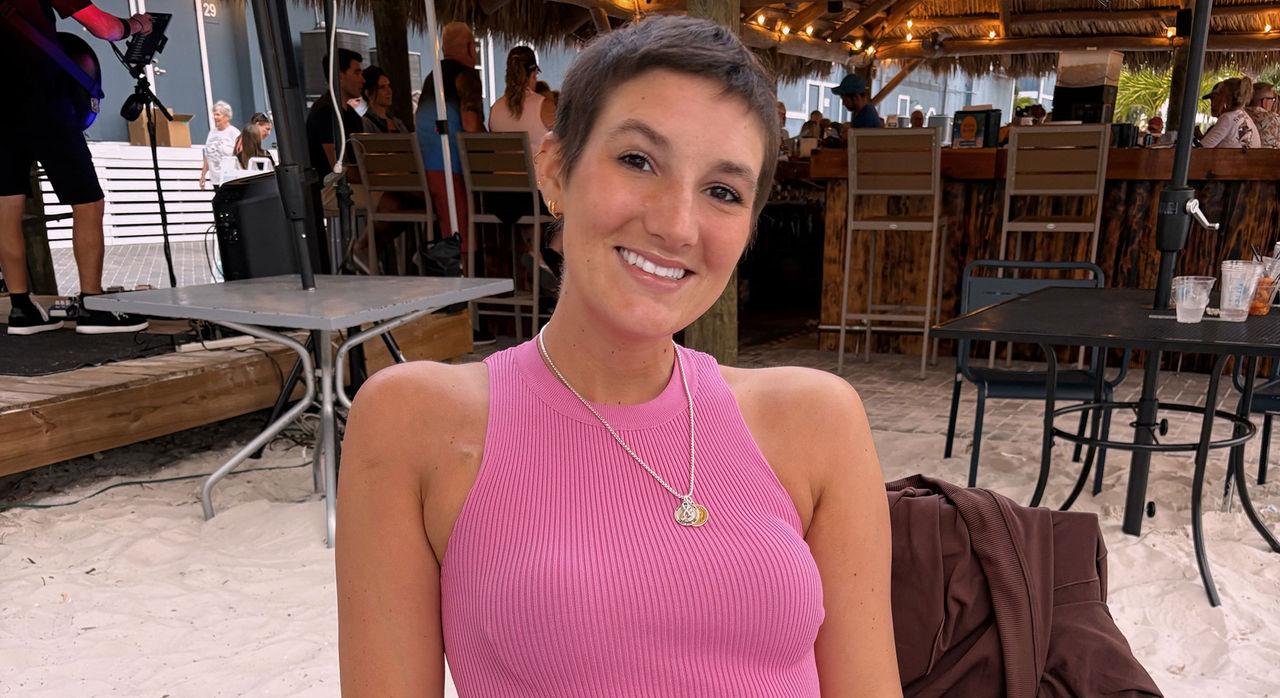
When Jessica Holmes, 25, kept getting bouts of strep throat last January, she didn’t give it much thought at first. As a paraprofessional in the Quincy Public Schools, “I do work with children,” she acknowledged.
Still, it was a lot. And she was otherwise healthy and active. In fact, she was in peak physical condition, having just achieved a personal best at the gym — deadlifting 215 lbs. at a bodyweight of 125 lbs. She was also quite busy. In between work, family and friends, she was pursuing a master’s degree in psychology.
How serious could a few sore throats be? Maybe she just needed to slow down, she thought.
“Then I started getting lumps on my neck, and I’d never had that before,” Jessica said. “My body was trying to tell me something.”
She listened to it — a decision that would upend her life but also save it. As Jessica would soon learn, she had Hodgkin lymphoma, a rare form of lymph node cancer that primarily affects young people.
And thanks to the world-class, multidisciplinary care she received at Mass General Brigham Cancer Institute, Jessica is now cancer-free and gradually returning to her normal — and delightfully busy — life.
“Once I am out of bed, I have a list of things I want to do for the day,” she said. “I’m on track to finish my master’s in May, and I’m excited to eventually go back to work and get my normal routine back. I’m doing Pilates at home, but I can’t wait to get back into the gym, try new things I didn’t know my body was capable of, and not take any days for granted.”
Her story is not just one of triumph over cancer. It is also a testament to the critical importance of comprehensive, patient-centered care delivered by multidisciplinary, highly specialized teams working in unity.
In Jessica’s case, the Cancer Institute’s subspecialized hematopathology service swiftly pinpointed the correct diagnosis from a very small tissue sample obtained at another hospital. This enabled her oncology team, located at Massachusetts General Hospital (MGH), to develop the most effective treatment plan, one that ultimately allowed her to avoid additional surgery after her biopsy. And because her cancer was identified relatively early, she could safely undergo fertility preservation at Brigham and Women’s Hospital (BWH) before beginning chemotherapy.
“One of the things that we are most proud of at Mass General Brigham is that we have the opportunity to support patients with all facets of their care,” said her oncologist, Ephraim (Effi) Hochberg, MD, one of the nation’s leading experts on Hodgkin lymphoma and executive vice chair of Hematology/Oncology for the Cancer Institute. “We are taking care of the whole patient, not just their cancer.”
From Jessica’s perspective, the experience at MGH and BWH was seamless. “The communication was perfect, and if I wasn’t feeling my best, they did all the talking and organizing for me,” she said. “They were all in the same boat. I never felt lost.”
In addition to her gratitude for such a positive outcome, Jessica says the warmth, compassion and genuine care she experienced is something she will carry with her always.
“Every staff member I met was just amazing. They’ve become part of my family,” she said, adding with a laugh, “and they’re stuck with me now.”
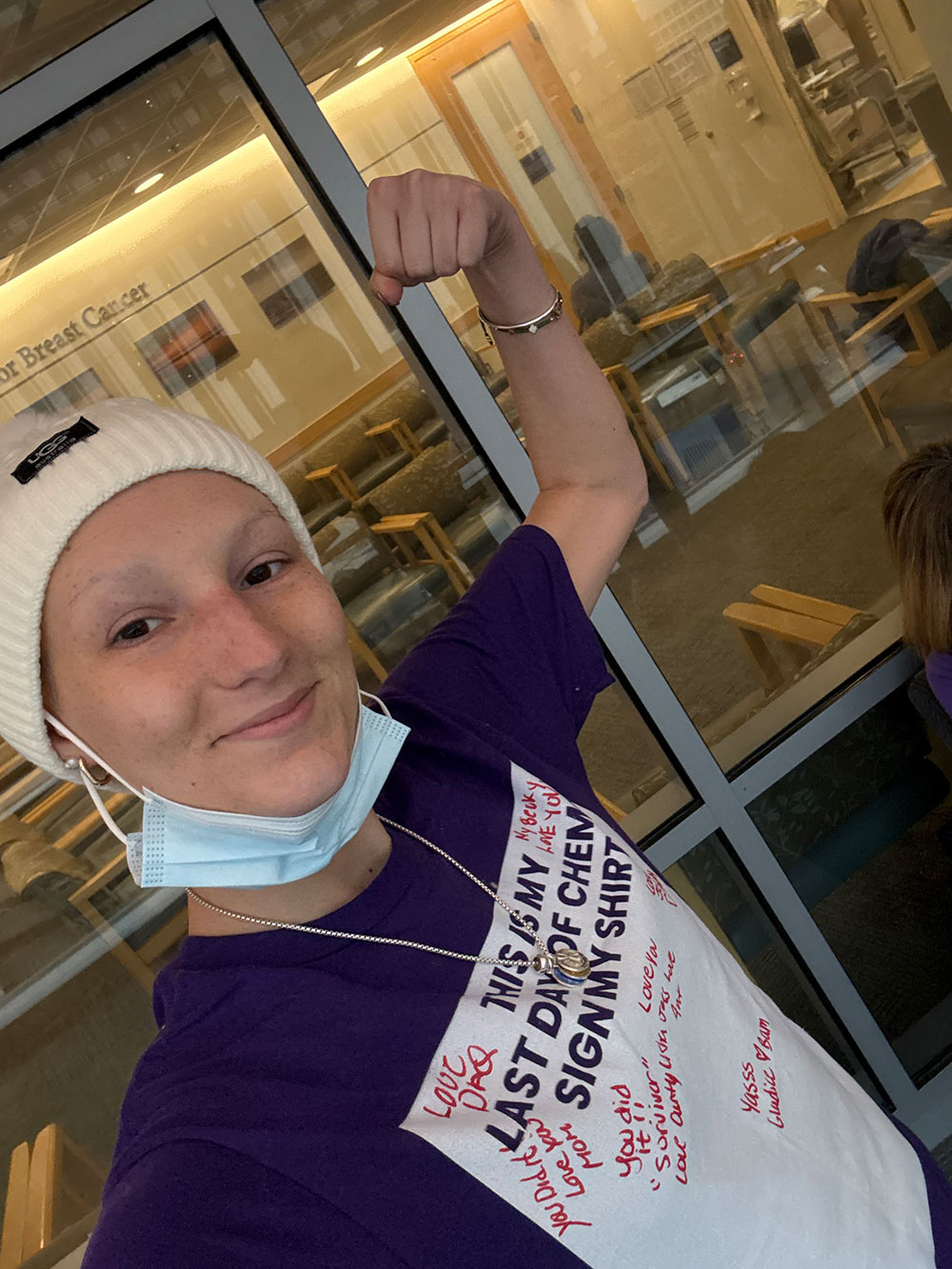
Jessica celebrates her last day of chemo.
Subspecialized expertise
When Jessica first became concerned about her symptoms, she sought care from her primary care doctor near her home in Weymouth and underwent a CT scan at a nearby community hospital.
“They told me it’s just a bacterial infection — nothing to worry about — and sent me home with amoxicillin,” she said. “Three weeks went by, and they told me everything was fine but that they wanted to do a biopsy to be safe. I never heard the C word.”
Another two weeks later, she received a call with earth-shattering news: She had lymphoma. But the lab wasn’t entirely certain of the type, so they wanted to send it to the Cancer Institute.
“Even though she had a very small biopsy, our board-certified hematopathologist was able to say this is clearly Hodgkin lymphoma — no question,” Dr. Hochberg said. “That multidisciplinary, subspecialized expertise, even when it's invisible to the patient, is critically important to delivering the best care.”
When Jessica decided to transfer her care to the Cancer Institute, she instantly felt her fears melt away.
“The second I met Effi, I was so relieved. He didn’t sugarcoat anything, but he was very comforting and confident, which was exactly what I needed,” Jessica remembered. “He sat down, showed me my CT scan and biopsy results, and explained the plan: This is where you have cancer, and this is what we’re going to do about it. I didn’t hear the word ‘think’ come out of his mouth once. To this day, everything has gone according to his word.”
That assuredness comes not only from his own extensive experience with the disease — Dr. Hochberg has been caring for Hodgkin lymphoma patients for 25 years and serves on the national panel that governs clinical guidance around it — but also because such advanced specialization and research-driven care are defining traits of the Cancer Institute.
“We have nine doctors who only see patients with lymphoma,” Dr. Hochberg said. “The average community hospital in Massachusetts might see one or two cases of Hodgkin lymphoma a year, whereas I see about five to 10 of them each year. Seeing a lot of this disease enables us to make clear decisions about treatment.”
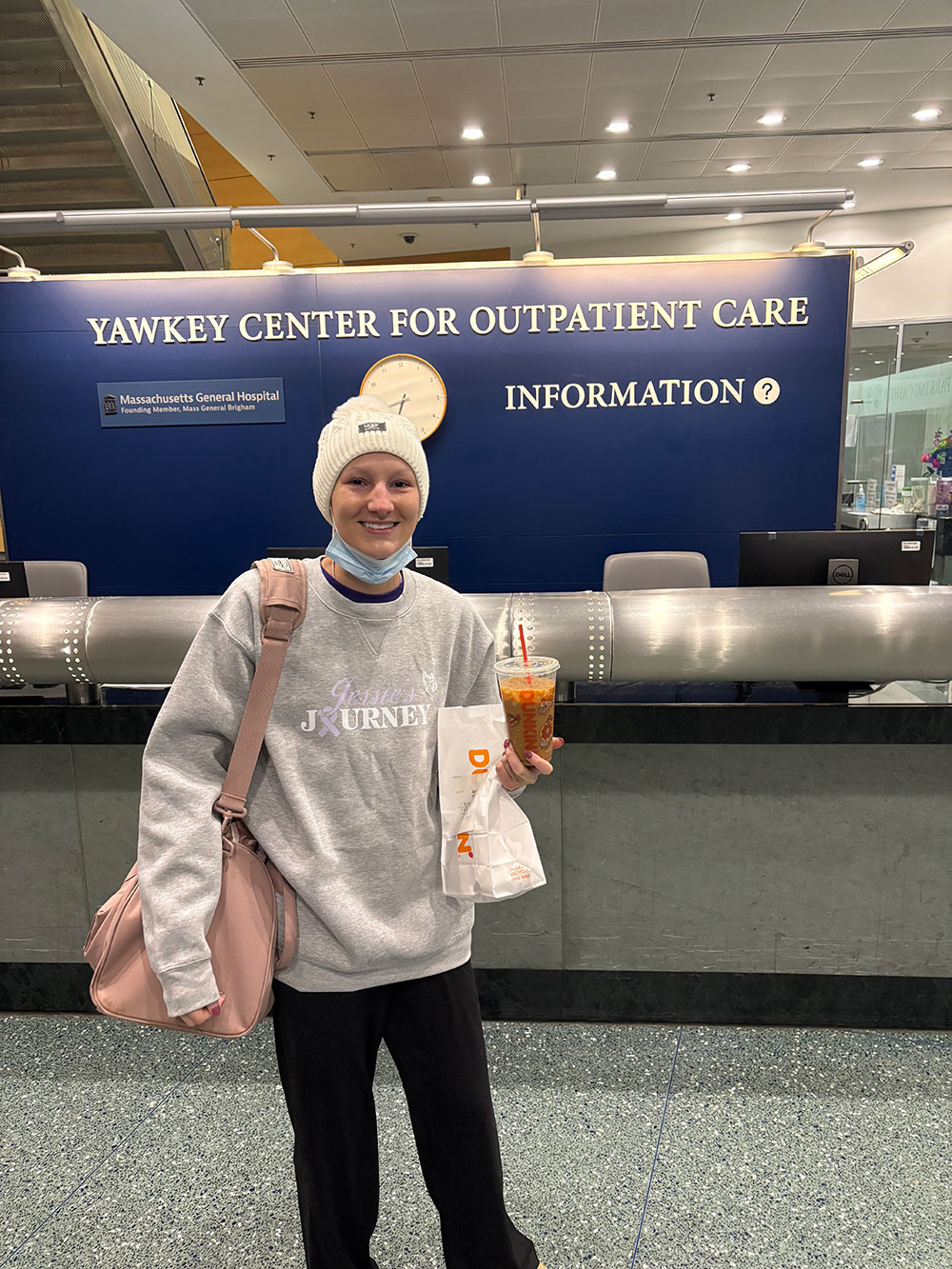
Planning for life after cancer
There are two main types of lymphoma: Hodgkin and non-Hodgkin lymphoma. The latter is far more common yet certain subtypes can be more difficult to treat. Often affecting older adults, non-Hodgkin lymphoma can develop in lymph nodes anywhere in the body and has more than 60 subtypes.
Conversely, Hodgkin lymphoma is rare yet also one of the most treatable and even curable forms of cancer. It progresses in a more predictable manner from one lymph node region to the next region. When caught early, it has cure rates of over 90%. Notably, however, Hodgkin lymphoma appears much earlier in adulthood, typically between ages 18 and 30, which presents different challenges.
“One of the primary things we think about with Hodgkin lymphoma is these patients have 50, 60 or 70 years of life ahead of them,” Dr. Hochberg explained. “We want to ensure the treatments we’re giving them will cure the disease but also cause the least possible toxicity.”
Fortunately, Jessica’s cancer was caught relatively early, otherwise known as limited-stage Hodgkin lymphoma. With all of these considerations in mind, Dr. Hochberg recommended Jessica undergo fertility preservation at BWH prior to beginning chemotherapy. The Cancer Institute team worked closely with the Reproductive Endocrinology team at the Brigham to coordinate everything in line with her cancer care.
“Collaboration around these not-directly-oncologic events, but things that are incredibly important for a patient's sense of well-being, is really important,” Dr. Hochberg said. “There's no question that she could have been referred outside of the system for that care, but it’s so much better for patients to have these teams working together closely. Moreover, we’re so fortunate to belong to a system that includes the nation’s No. 1 hospital for OB-GYN.”
Although she says it was initially overwhelming to consider such a big question — motherhood — on top of a cancer diagnosis at a young age, Jessica said, ultimately, the experience was “life-changing.”
“After going through the process, they ended up retrieving 36 eggs. Hearing that news was a beautiful thing,” she said. “Knowing that my body was capable of doing that, despite having cancer, made me mentally and physically stronger for what was ahead.”

Jessica (background) goes parasailing with her sister in Florida as part of her post-cancer victory lap.
Lasting impressions
Ultimately, Jessica underwent 12 rounds of chemotherapy, multiple imaging scans and many outpatient visits. It was hard, physically and emotionally. Her loved ones were a key source of support, along with her care team, including Violeta Alvarez, BSN, OCN, RN, a nurse in the Medical Infusion Center at MGH, psychiatric oncologist Kelly Irwin, MD, and Julia Lynch, CNP, nurse practitioner at the Jon and Jo Ann Hagler Center for Lymphoma, among many other staff.
Members of her care team insist that Jessica left a lasting impression on them, too.
“Even when she may not have been feeling her best, she always wore a warm and contagious smile,” Alvarez said. “Jess is a fighter, and she carried herself with resilience and a positive mindset every single day during her infusion visits. She is an amazing human being, and it was truly an honor to be part of her journey.”
During one infusion, Jessica experienced a panic attack for the first time in her life. Terrified, her first instinct was to yell for Alvarez, who was by her side within seconds.
“When I heard her voice, I felt like I could breathe again,” Jessica remembered. “If I was having a good day or a bad day, Violeta just knew. She made me feel so welcome and comfortable. When I see her, my eyes light up.”
There were also unexpected moments of joy. When one of her visits coincided with Halloween, Jessica surprised and delighted Dr. Hochberg by playfully dressing up as him. She also gifted staff “Jessie’s Journey” shirts to reaffirm their importance as members of her team.
“Young people come to this disease in a couple of different ways. For some patients, it’s fear or denial. Jess came at it from almost a joyous acceptance: This is what I have, and I’m going to be my best self through this,” Dr. Hochberg said. “Her attitude was infectious for all of us.”
Lynch agreed: “Jess is a lovely young woman who handled her diagnosis and treatment with courage, grace and humor. She lights up a room! This was so obvious with all the family and community support behind her. It was a privilege to be a part of her care.”
Jessica formed an especially close bond with Dr. Hochberg, whom she described “a truly amazing doctor” in every respect. “Even if Effi didn’t have me as a patient that day, he would come out to see me and ask, genuinely, how I was doing,” she said.
On the day they reviewed her final scans — where she learned the treatment succeeded — she presented him with a plaque to express her appreciation.
“It was a very emotional day,” she said. “He deserves to know he’s made such a difference in not only my life but also my family’s.”
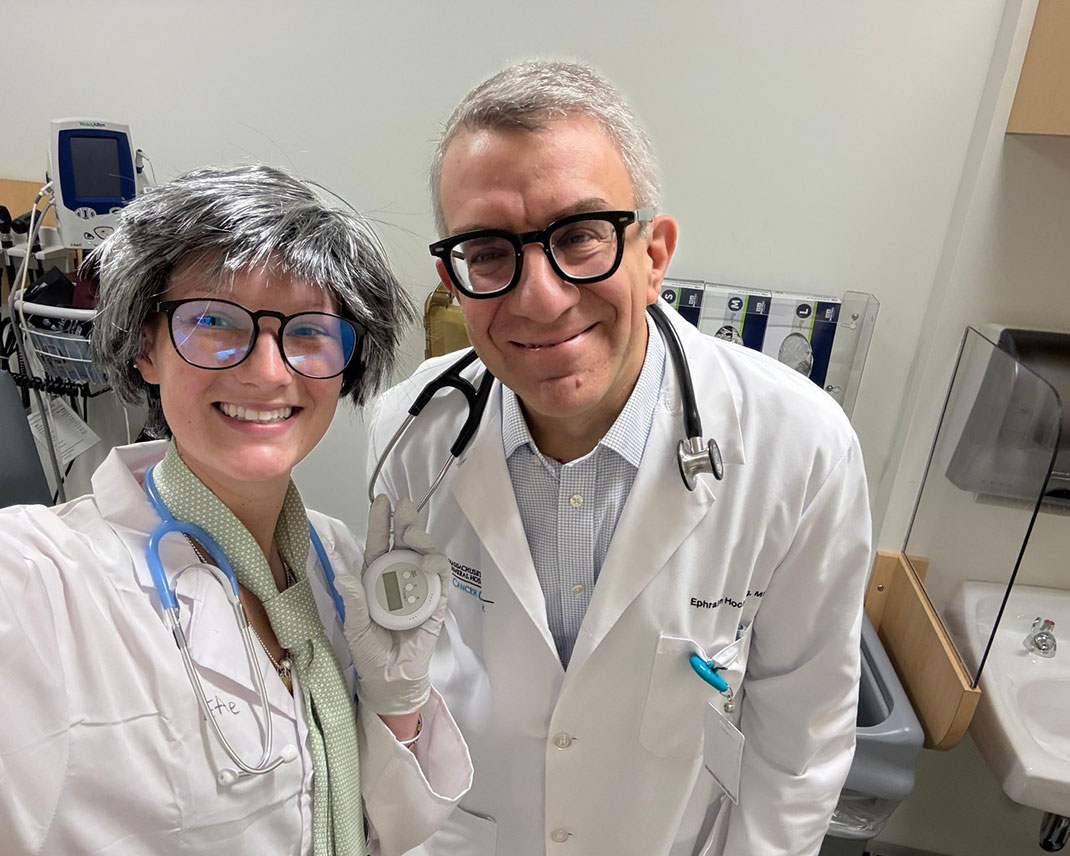
Tricks and treats: Jessica surprises Dr. Hochberg on Halloween by dressing up as him for her costume.