
Exercise Hormone Irisin Could Offer Neuroprotective Effects in Multiple Sclerosis
A preclinical study from Mass General Brigham found evidence that irisin could offer a potential target for future MS therapies.
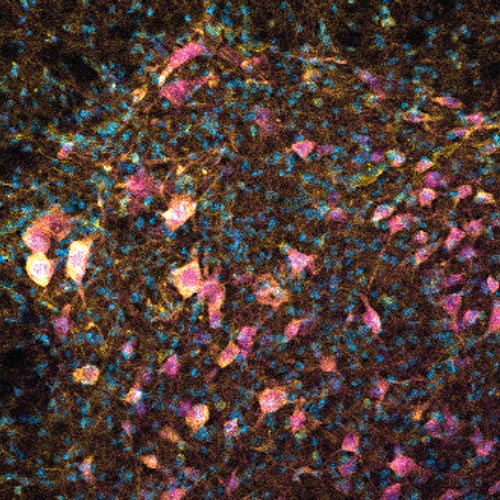

Authorship: In addition to Wrann, Rosenkranz, and Sîrbulescu, co-authors include Joana F. da Rocha, Luis Moreira, Pius Schlachter, Jasmina Bier, Kaela Healy, Daniela Neves Silva, Mohamed Ariff Iqbal, Marjan Gharagozloo, Yueyue Xiong, Matthew A. Murphy, Helena C. Lichtenfeld, Lukas Raich, Michaela Schweizer, Asude Ertaş, Marcel S. Woo, Vanessa Vieira, Samuel E. Honeycutt, James P. White, Gregory A. Wyant, Manuel A. Friese, and Peter A. Calabresi.
Disclosures: Wrann holds a patent related to irisin (WO2015051007A1). Wrann is an academic co-founder and consultant for Aevum Therapeutics. Wrann has a financial interest in Aevum Therapeutics, a company developing drugs which harness the protective molecular mechanisms of exercise to treat neurodegenerative and neuromuscular disorders. Wrann received honoraria from Novartis outside the scope of this work. Wrann’s interests were reviewed and are managed by Massachusetts General Hospital and Mass General Brigham in accordance with their conflict of interest policies. Rosenkranz has received speaker honoraria from Merck, Roche and Sanofi, all outside of this work. Calabresi has received consulting fees from Lilly and Novartis and is PI on a grant to JHU from Genentech. Woo received honoraria from Lilly and Eisai outside the scope of this work.
Funding: This work was supported in part by the National Institutes of Health (NS117694, AG062904, AG064580, AG072054, NS117598, NS041435, R56AG056664, T32AG07057); the Cure Alzheimer’s Fund; a SPARC Award from the McCance Center for Brain Health; the Hassenfeld Clinical Scholar Award; the Claflin Distinguished Scholar Award; the Boehringer Ingelheim Fonds travel grant; the Advanced Clinician–Scientist Fellowship from the Federal Ministry of Education and Research, Germany (iSTAR 01EO2106); the Gemeinnützige Hertie‑Stiftung (P1200012, P1250014); the Deutsche Forschungsgemeinschaft (DFG, German Research Foundation—project 523862973); a National MS Society Career Transition Grant (TA‑2104‑37423); and the Else‑Kröner‑Fresenius‑Foundation.
Paper cited: Rosenkranz SC et al. “The exercise hormone irisin has neuroprotective effects in a mouse model of multiple sclerosis” Nature Metabolism DOI: 10.1038/s42255-026-01527-7
Media contact
About Mass General Brigham
Mass General Brigham is an integrated academic health care system, uniting great minds to solve the hardest problems in medicine for our communities and the world. Mass General Brigham connects a full continuum of care across a system of academic medical centers, community and specialty hospitals, a health insurance plan, physician networks, community health centers, home care, and long-term care services. Mass General Brigham is a nonprofit organization committed to patient care, research, teaching, and service to the community. In addition, Mass General Brigham is one of the nation’s leading biomedical research organizations with several Harvard Medical School teaching hospitals. For more information, please visit massgeneralbrigham.org.