Osteoporosis Screening: What to Know
Calcium and other minerals in your bones help keep them strong, but these decrease as you age. This may cause your bones to become weak and brittle, leading to a condition called osteoporosis—which many people don’t realize they have until they fracture a bone.
“We screen for osteoporosis with a bone density scan—a special test using an x-ray to measure the amount of mineral in your bones,” says Sharon Chou, MD, a Mass General Brigham endocrinologist. “This quick scan helps us understand your risk of bone fractures.”
Dr. Chou, who cares for patients at Brigham and Women’s Hospital, explains more about bone density scans, including who should get them, what to expect at your appointment, and what factors increase your risk of osteoporosis.
Who needs bone density screening?
Doctors screen older patients for osteoporosis with a bone density scan as part of routine health screening. They may also screen patients who are at risk for osteoporosis for other reasons, as a precaution. If you have osteoporosis or another bone condition, your doctor may use the bone density scan to monitor your treatment.
Your doctor might order a bone density scan if:
- You recently broke a bone or may be at risk for future bone fracture.
- You’re monitoring a health condition already and need to record your rate of bone loss.
- You take certain medications that can increase your risk for osteoporosis.
How does a bone density test work?
A special x-ray process called DXA or DEXA is used for bone density tests. DXA stands for “dual-energy x-ray absorptiometry.”
DXA scans are similar to regular x-rays and use small amounts of radiation to scan your body. The scan measures how much calcium and other minerals are in your bones, usually in your hip and spine. These are where the most debilitating fractures from osteoporosis happen.
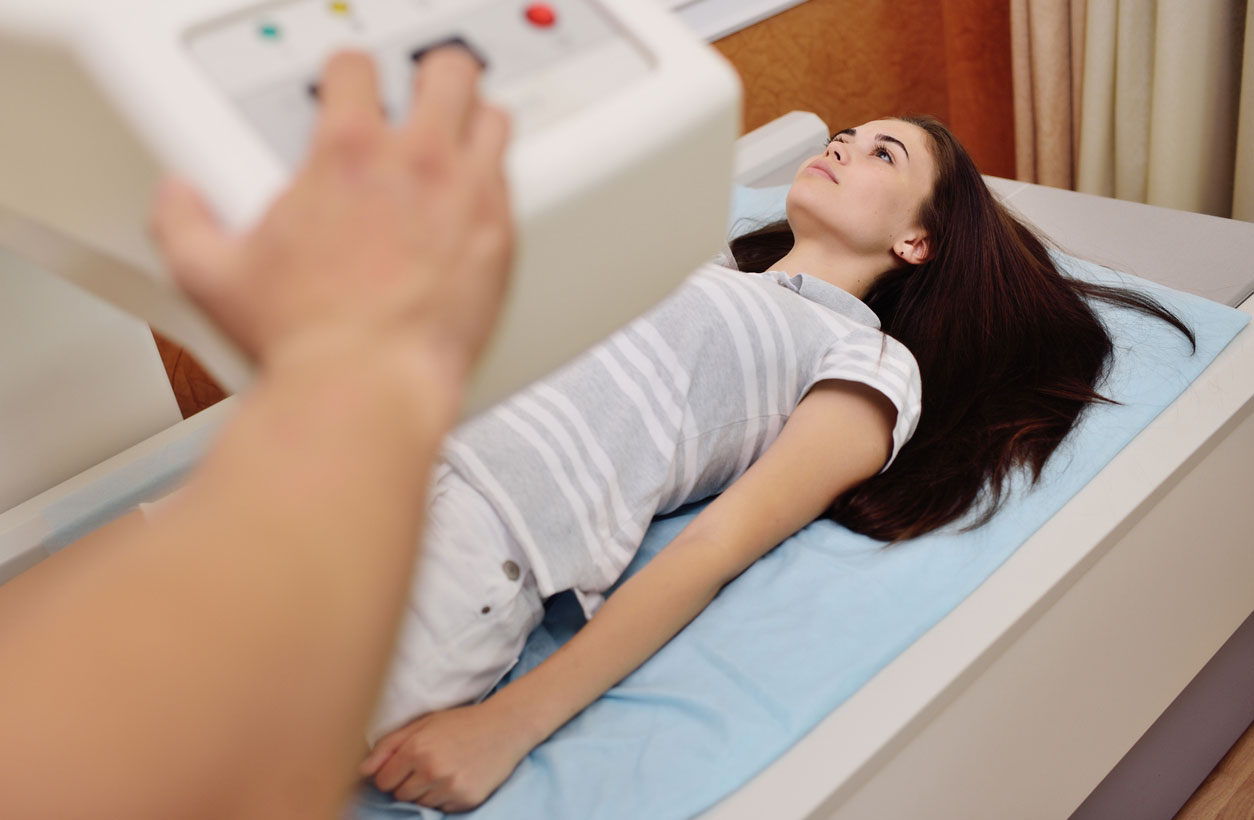
“During the scan, you lie on a table, and the scanner is above you. It’s much more open than an MRI, so you shouldn’t feel claustrophobic,” says Dr. Chou.
The scan measures your bone mineral density in two types of scores:
- T-score: This compares the density of your bones to the average bone density of women in their 20s, when you have the most bone density (or reach peak bone density). Providers use this score for women after menopause and men who are 50 years or older.
- Z-score: This compares your bone density to the average bone density for healthy people in your age group. Providers usually use this score for premenopausal women, men who are younger than 50, and children.
Understanding your T-score
Your T-score helps providers understand the risk of osteoporosis and bone fracture in postmenopausal women and men at age 50 or older. A lower (more negative) T-score means you have a higher risk of fracture.
Your T-score falls into 3 categories:
- Healthy level of bone density: - 0 or above
- Low bone density (or osteopenia): -1.1 to -2.4
- Osteoporosis: -2.5 or lower
How long does a bone density test take?
These low-radiation scans usually take anywhere from 10 to 30 minutes.
How to prepare for a DXA scan
Your provider explains what to expect before your bone density scan. You don’t need to prepare much before your appointment, but here are some things to keep in mind:
- Food and drink: Eat and drink as you normally would on the day of your test.
- Supplements and medication: Make sure you don’t take calcium supplements for at least 24 hours before your test. It’s OK to take your normal medication.
- Clothing: Wear loose, comfortable clothing, preferably without metal such as zippers, buttons, or underwire bras. Metal interferes with the bone density measurement. Your technician may also have you remove your eyeglasses or jewelry.
- Pregnancy: Let your provider know if there’s any possibility you may be pregnant. They may wait until after you give birth to do your scan.
- Contrast: Let your provider know if you recently had a barium exam or an IV contrast for a CT or radioisotope scan. You may have to wait 10 to 14 days before having a bone density test.
Osteoporosis is treatable, but it’s important we understand your risk sooner rather than later to help prevent fractures.
Sharon Chou, MD
- Endocrinologist
- Mass General Brigham
Risk factors for osteoporosis
Many factors can influence your risk for osteoporosis. “Age, sex, and the use of certain medications are the leading contributors of osteoporosis, but other genetic and lifestyle factors can also play a part,” Dr. Chou explains.
Known factors that elevate your risk of fracture/osteoporosis include:
- Age over 65
- Gender (women or people assigned female at birth are at risk earlier)
- Genetics, including a family history of hip fracture
- History of fracture after the age of 50 years
- Steroid therapy (prednisone) for more than 3 months
- Early menopause
- Low body mass index (BMI)
- Smoking
- Excessive alcohol use
Age and sex
Age and sex determine a person’s risk for osteoporosis more than any other factors. The risk for osteoporosis increases in both women and men over age 50, as they no longer make enough new bone to keep up with the pace of natural loss over time.
Women develop osteoporosis earlier than men because the hormonal changes at menopause cause accelerated bone loss. Women also typically have smaller and less dense bones than men.
Hormonal changes
Hormones, especially in women, can play a big part in developing osteoporosis.
After menopause, women’s bodies stop producing a hormone called estrogen, which plays a key role in bone metabolism. This accelerates the process of losing bone density as you age. Taking hormone replacement therapy (HRT) after menopause can help prevent bone loss and reduce fracture risk.
Men with conditions that cause low levels of the male hormone testosterone are also at increased risk for bone density loss. Taking testosterone replacement therapy (TRT) may help preserve healthy levels of bone mineral density in men but may not reduce fracture risk.
Chronic health conditions
Conditions that increase risk of developing osteoporosis include:
- Rheumatoid arthritis
- Diabetes
- Gut malabsorption
- Thyroid conditions
- Kidney disease
- Liver disease
Nutrition and physical activity
Nutrition and physical activity also play important roles in bone density. Certain key vitamins and minerals in your diet can help maintain your bone density.
Both calcium and vitamin D are essential, and not getting enough of them increases your risk for osteoporosis. Taking vitamin D and calcium supplements and staying active through regular exercise, both weight-bearing exercise like walking and strength training, can help reduce your risk.
Medications linked to bone density loss
Researchers have linked several medications to bone loss. The most common ones include:
- Steroid medicines, like prednisone and dexamethasone
- Antidepressants
- Medicines for acid reflux
- Certain cancer medications
Talk to your provider about osteoporosis screening
Bone density tests and DXA scans are common imaging procedures. Your primary care provider (PCP) can refer you to a hospital or other location that offers the service.
“If you’re more than 50 years old and have any risk factors, ask your PCP about osteoporosis screening,” says Dr. Chou. “Osteoporosis is treatable, but it’s important we understand your risk sooner rather than later to help prevent fractures.”