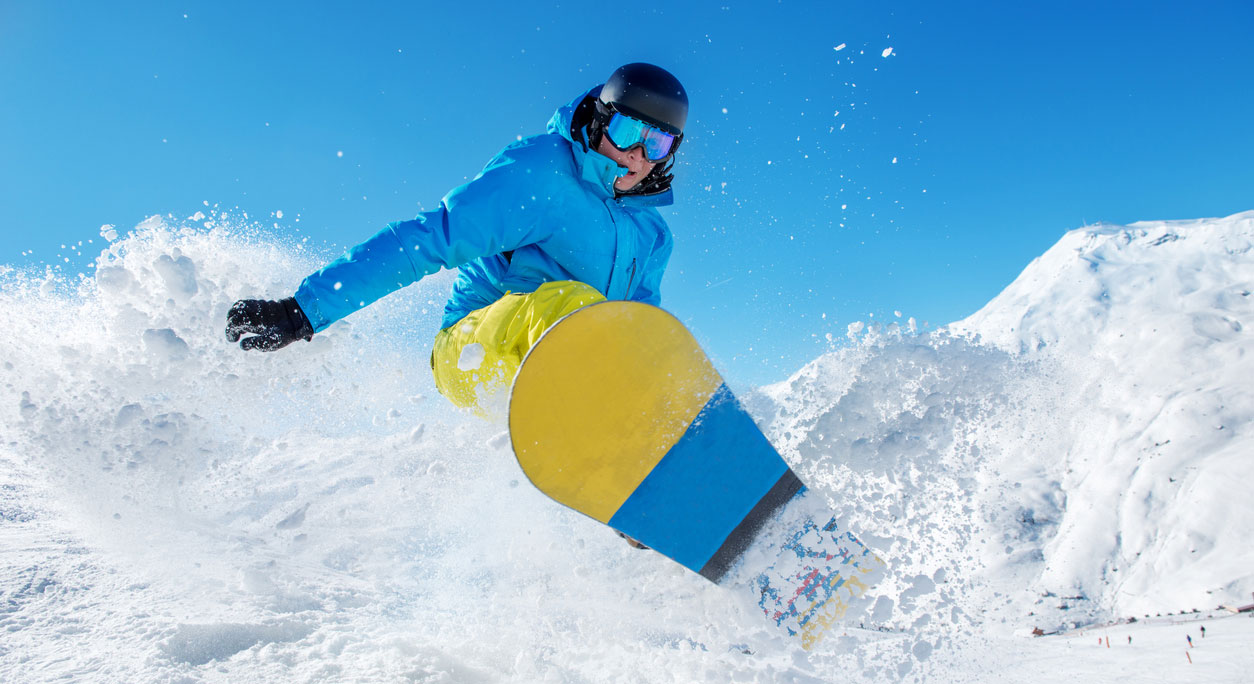
Snowboarding is a thrilling winter sport that challenges your entire body. Navigating sharp turns and explosive jumps on varied terrain demands a lot from your muscles and joints.
While injuries can happen at any time, awareness can significantly reduce your chances of getting hurt. Jason Simon, MD, is a Mass General Brigham orthopedic surgeon (and avid snowboarder) who cares for patients at Newton-Wellesley Hospital. Here, he talks about the most common snowboarding injuries he treats and injury prevention strategies for maximizing your time on the mountain.
Common snowboarding injuries
Snowboarding injuries are usually acute (sudden). They often occur because of a traumatic event, such as falling or landing incorrectly.
Acute injuries can strike no matter your skill level but tend to be more common in beginners. ”About 15% to 25% of snowboard injuries happen on day one when you're learning how to snowboard,” says Dr. Simon. These injuries can affect your upper or lower body, anywhere from your head and shoulders to your wrists, ankles, or knees.
Snowboarders can also develop overuse injuries when muscles, joints, tendons, or ligaments break down over time from excessive activity or improper technique. In total-body sports like snowboarding, overuse injuries can appear practically anywhere on the body.
Snowboarding wrist injuries
Roughly 20% to 40% of snowboard injuries affect the wrist. Dr. Simon commonly sees wrist sprains (tearing of a ligament) and fractures (broken bone), which tend to happen from falls onto an outstretched hand.
Snowboarding shoulder injuries
Your shoulders don’t do much while you’re snowboarding but tend to absorb the brunt of your body weight when you fall. You can fracture or sprain your shoulder in a single traumatic event or develop pain from falling repeatedly.
Common shoulder injuries Dr. Simon sees from snowboarding include:
- Acromioclavicular (AC) joint separation: Tearing of the ligaments that link the clavicle (collarbone) to the shoulder blade
- Clavicle fracture: Breaking or cracking of the clavicle bone
- Shoulder joint dislocation: Popping of the shoulder joint out of its socket
Ankle sprains and fractures in snowboarding
Snowboarding boots are less rigid than ski boots, which gives your feet more freedom of movement. But that flexibility increases your risk of ankle sprains and fractures.
Dr. Simon says the talus bone in the ankle joint is especially prone to fracture in snowboarders—so much so that this injury is known as a “snowboarder’s fracture.” These fractures typically occur from falling with the foot bent upward (dorsiflexion).
Head injury from snowboarding
Fast, high-impact sports tend to have a higher risk of head trauma. In snowboarding, concussions make up about 15% of all injuries. They can happen to anyone, regardless of skill level. Falling on hard-packed snow and colliding with other snowboarders are just a couple of ways you can experience a sudden impact to the head. Wearing a helmet helps protect your skull.
ACL injury from snowboarding
You’re less likely to injure the anterior cruciate ligament (ACL) in your knee while snowboarding than while skiing. “However, it can happen if a snowboarder does a large jump and lands with a flat board,” Dr. Simon says. The direct trauma can cause the ACL to tear, and you may hear a popping sound along with knee pain and swelling.
You can certainly teach yourself snowboarding, but learning appropriate technique can help prevent injuries.
Jason Simon, MD
- Orthopedic Surgeon
- Mass General Brigham
Snowboarding injury prevention
“Most snowboarding injuries are never going to be 100% avoidable,” Dr. Simon says. That said, there are steps you can take to reduce your risk.
Get in shape.
Snowboarding requires cardiac fitness and muscular strength. Without adequate conditioning, your chances of injury increase as you get fatigued. Dr. Simon recommends doing cardio like jogging, swimming, and cycling during the warmer months to prepare for the demands of snowboarding.
Don’t forget to strength-train your legs. Exercises such as squats, lunges, and leg presses help prepare your joints and tissues for a long day on the slopes. “The stronger you are, the more joint stability and muscle protection you have,” Dr. Simon says.
Take lessons.
Consider signing up for lessons if you’re new to snowboarding. “You can certainly teach yourself snowboarding, but learning appropriate technique can help prevent injuries,” Dr. Simon says.
Consider your environment.
Choose trails that match your skill levels and monitor changing conditions. The highest risk for injury generally comes when the snow is skied off and temperatures drop. This introduces hazards like buried rocks, icy patches, and uneven terrain. That’s usually the time to call it quits.
Wear protective gear.
Invest in a helmet to lower your risk of head injury. “Helmets are important, because everybody falls, regardless of your level of proficiency with a snowboard,” Dr. Simon says.
Given the high incidence of wrist injuries, also consider wearing wrist guards for protection. “They fit underneath your gloves, so you don’t even notice them,” assures Dr. Simon.